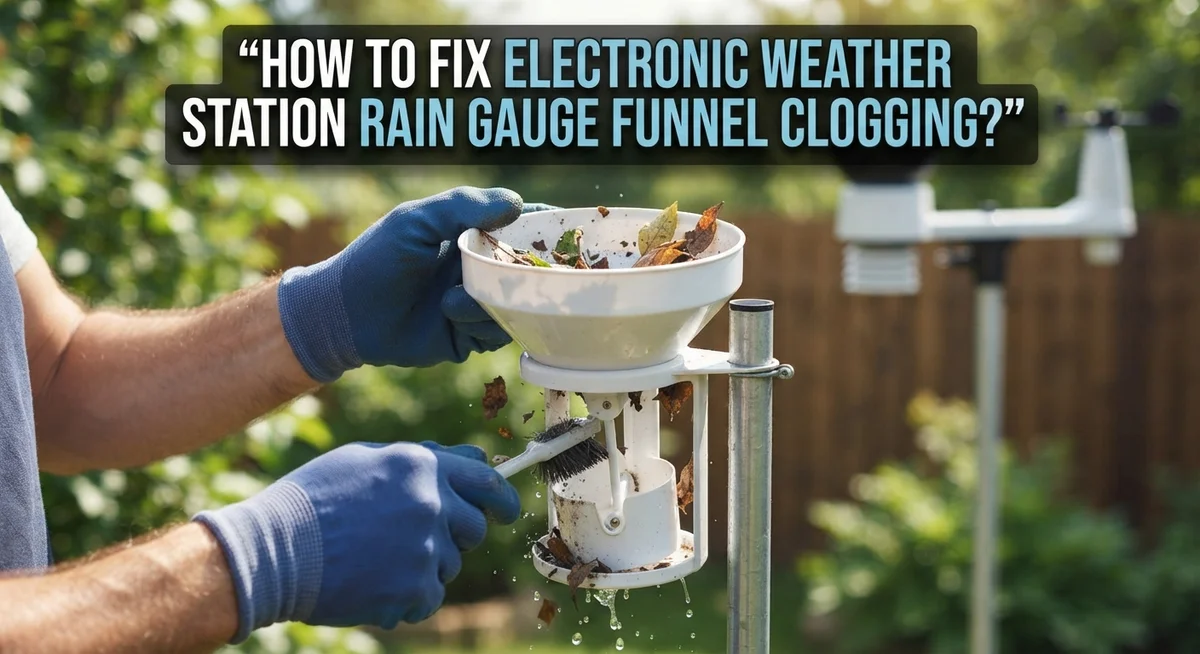
How To Fix Electronic Weather Station Rain Gauge Funnel Clogging?
Does your rain gauge show zero readings even during heavy rain? A clogged funnel might be the problem. Debris, dust, and small insects often block the tiny opening where rainwater enters.
This blockage stops water from flowing into the measuring chamber. Your electronic weather station then sends incorrect data or no data at all. It can be frustrating when you rely on accurate readings.
Rain gauge funnels collect small amounts of water and direct it into a sensor. Over time, leaves, pollen, and grit build up inside the narrow tube. This buildup blocks the natural flow of water.
In a Nutshell
- Check the funnel first. Look for leaves, dirt, or bugs stuck inside. This is the most common cause of clogging.
- Remove the funnel carefully. Most rain gauge funnels twist off or lift out easily. Handle it gently to avoid cracks.
- Rinse with warm water. Warm water loosens dried debris fast. Use a soft brush for stubborn spots.
- Use a thin wire or pipe cleaner. Gently push out any blockage inside the small holes. This restores normal water flow.
- Dry the funnel completely. Moisture left behind can attract more dirt. Let it air dry before reattaching.
- Clean the funnel regularly. Monthly checks prevent future clogs. This keeps your readings accurate all season.
- Test after cleaning. Pour a small amount of water through the funnel. Watch if it flows smoothly into the sensor.
Understanding How a Rain Gauge Funnel Works
A rain gauge funnel works like a simple filter system for your weather station. Water falls into the wide opening at the top of the funnel. The funnel narrows down and directs all that water into a small measuring chamber below.
The funnel’s design serves an important purpose. It collects rainfall from a larger surface area and concentrates it into a smaller space. This allows the sensor to measure even light rain accurately. Most funnels have a diameter between 4 to 8 inches at the top.
Inside the funnel, small holes or a narrow tube direct water downward. These openings are intentionally small to prevent splashing and ensure accurate readings. The funnel also keeps debris from entering the sensor chamber directly.
Here’s why clogging happens so easily. Leaves, pollen, dirt, and insects naturally fall into the funnel opening. Over time, these materials pile up and block the water path. When the funnel clogs, water cannot flow through properly. Your weather station then records zero or incorrect rainfall amounts.
The funnel material matters too. Most funnels are made from plastic or metal. Plastic funnels can develop cracks over time, while metal ones may rust. Both types need regular inspection to work correctly.
Understanding this simple mechanism helps you spot problems quickly. When your rain gauge stops working, the funnel is usually the culprit. The good news is that the funnel design makes cleaning straightforward. You can access it easily without special tools or technical knowledge. Regular maintenance keeps your funnel clear and your readings accurate all year long.
Common Causes of Funnel Clogging
Leaves and debris are the top culprits behind funnel clogs. When it rains, wind carries leaves, twigs, and pollen directly into your gauge. These materials pile up inside the funnel opening and block water flow.
Insects cause problems too. Spiders, ants, and small bugs crawl into the funnel seeking shelter. Dead insects then accumulate and create blockages that stop rainfall measurements.
Dirt and dust settle inside funnels over time. Even fine particles combine with moisture to form a sticky paste. This paste hardens and seals the small drainage holes completely.
Bird droppings are another common issue. Birds land on weather stations and leave waste inside the funnel. This material dries quickly and sticks to the funnel walls.
Rust and corrosion develop on metal funnels exposed to rain and sun. Corroded surfaces become rough and trap debris more easily. The rough texture catches particles that smooth surfaces would let pass through.
Mineral deposits build up when you live in areas with hard water. Rainwater contains minerals that leave white or brown crusty layers. These deposits narrow the funnel opening gradually.
Poor funnel design makes some models worse than others. Funnels with wide rims collect more debris. Funnels with sharp angles trap particles in corners.
Lack of maintenance speeds up clogging. When you skip regular cleaning, small blockages grow into major problems. Months of buildup create stubborn clogs that need extra effort to remove.
Understanding these causes helps you prevent future issues. You’ll know what to watch for and when to clean your gauge. Regular inspection catches problems before they affect your weather readings significantly.
Tools and Materials Needed for Cleaning
Before you start cleaning your rain gauge funnel, gather the right tools. You won’t need many items, and most are already in your home.
Basic cleaning supplies work best for this job. Get a bucket of warm water and a soft cloth or sponge. Warm water dissolves dried debris without damaging the funnel material. A bottle brush or old toothbrush helps scrub tight spaces inside the funnel.
For stubborn blockages, thin tools are essential. A pipe cleaner slides through narrow openings easily. You can also use a thin wire, straightened paperclip, or small piece of flexible tubing. These tools push out trapped leaves and dirt without scratching the funnel surface.
Protective gear keeps you safe while working. Wear gloves to protect your hands from dirt and bacteria. Safety glasses help if debris falls during cleaning. A small stepladder might be needed to reach your weather station safely.
Drying equipment matters too. Have clean, dry towels ready before you start. You’ll need these to dry the funnel completely after rinsing. Compressed air works well for removing water from small holes, but a regular towel does the job fine.
Optional items make cleaning easier. A small container helps you soak stubborn debris. Vinegar mixed with water removes mineral deposits on metal funnels. A magnifying glass lets you inspect small holes for remaining blockages.
Keep these tools together in one place. Store them near your weather station so you remember to use them monthly. Regular maintenance prevents major clogs from forming. Having supplies ready makes cleaning quick and simple whenever you need it.
Step-by-Step Guide to Clearing a Clogged Funnel
Start by turning off your weather station completely. This prevents any electrical damage while you work on the funnel.
Locate the funnel assembly on your rain gauge. Most models sit at the top of the device. Check your manual if you’re unsure where it connects. The funnel usually twists counterclockwise to remove, though some models have clips or latches you need to press first.
Once removed, hold the funnel over a trash bin. Tap it gently to dislodge loose debris. Don’t force anything or you might crack the plastic or damage the internal components.
Rinse the funnel under warm running water. Let the water flow through the small opening at the bottom. This removes surface dirt and dried residue quickly. For stubborn material stuck inside, use a thin wire or pipe cleaner. Insert it gently through the bottom opening and push upward with a slight twisting motion. Work slowly to avoid puncturing any internal walls.
For mineral deposits or hard water buildup, soak the funnel in warm water mixed with a small amount of white vinegar. Let it sit for 15 to 20 minutes. Then scrub gently with a soft brush or cloth.
Rinse thoroughly with clean water after soaking. Any vinegar residue left behind can affect your measurements. Pat the funnel dry with a soft cloth. Make sure no moisture remains in the small holes or internal tube.
Inspect the funnel for cracks or damage before reinstalling. Even tiny cracks can cause water leaks and inaccurate readings. If you spot damage, the funnel needs replacement.
Reattach the funnel securely to your weather station. Turn it clockwise until it sits snugly. Power your station back on and test it with a small amount of water.
Cleaning the Tipping Bucket Mechanism
The tipping bucket mechanism is the heart of your rain gauge’s accuracy. This small container tips back and forth each time it collects a set amount of water, usually 0.01 inches. When debris clogs the funnel above it, water cannot reach the bucket properly, causing false readings or no readings at all.
Start by locating the tipping bucket assembly beneath your funnel. You’ll find it’s a simple seesaw style container with two small buckets. Gently remove this mechanism from your weather station following your manual’s instructions.
Inspect the bucket openings carefully. Look for any leaves, dirt, or mineral buildup blocking the water entry points. These small openings clog easily, so check them first before disassembling anything else.
Use a soft brush or cloth to gently remove loose debris from the bucket surfaces. Never use harsh scrubbing motions, as you might damage the delicate balance mechanism. The bucket must tip smoothly for accurate readings.
For stuck debris, soak the entire tipping bucket assembly in warm water for 15 to 20 minutes. This softens stubborn material without requiring aggressive cleaning. After soaking, use a thin tool to carefully dislodge any remaining blockages from the openings.
Rinse thoroughly with clean water. Make sure no soap or vinegar residue remains, as this affects the bucket’s weight and balance.
Check that the bucket pivots freely after cleaning. It should move smoothly with minimal resistance. If it sticks or feels stiff, the mechanism needs further attention or professional service.
Allow the assembly to dry completely before reinstalling. Moisture left inside can cause corrosion and future clogs. Once dry, reattach it securely to your weather station.
Tips to Prevent Future Clogging
Regular maintenance is your best defense against rain gauge funnel clogs. Start by checking your funnel monthly, especially during seasons with heavy rainfall or debris.
Install a mesh screen or protective cover over your funnel opening. This simple addition catches leaves and larger debris before they enter the system. Make sure the screen has small enough holes to block debris but large enough to allow water through freely.
Keep trees and branches trimmed away from your weather station. Falling leaves and twigs are major culprits behind clogs. Position your station at least 10 feet away from trees when possible.
Clean your funnel every three months as part of routine maintenance. Don’t wait until you notice problems. Regular cleaning takes just 10 minutes and prevents serious blockages from forming.
Check your funnel after storms when debris is most likely to accumulate. Wind and heavy rain can push dirt, pollen, and organic matter into the opening.
If you live in an area with hard water, add a water softening element near your station. This reduces mineral buildup that hardens over time and becomes difficult to remove.
Inspect the funnel’s drainage holes regularly. Use a thin wire or needle to gently clear any small openings that look partially blocked.
Consider your station’s location carefully. Avoid placing it in low spots where water pools or where wind kicks up dust and debris. Higher ground with good air circulation works best.
Keep a maintenance log. Write down when you clean the funnel and what you find. This helps you spot patterns and plan cleaning schedules around your local weather patterns.
Troubleshooting Persistent Rainfall Reading Errors
When your rain gauge keeps showing incorrect rainfall amounts, the problem usually stems from water not flowing properly through the system. Persistent reading errors happen when clogs block the path from the funnel to the tipping bucket mechanism.
Start by checking if water drains slowly from your funnel. Pour a small amount of water into the funnel opening and watch how it flows. If water pools or drips very slowly, you have a blockage somewhere in the system. The issue might be in the funnel itself, the connecting tube, or the tipping bucket inlet.
Next, examine the connecting tube between your funnel and tipping bucket. This tube often collects debris that the funnel doesn’t catch. Remove any visible leaves, dirt, or buildup using a thin brush or cloth. You can also flush the tube with warm water to push out trapped material.
Check the gauge’s base area where water collects after the tipping bucket releases it. Sediment and mineral deposits can build up here and create a blockage. Empty this collection area completely and rinse it clean.
Verify your station is level after clearing clogs. A tilted gauge causes water to flow unevenly, creating false readings. Use a simple level tool to check all angles.
If errors continue after cleaning, the tipping bucket might have internal damage. The bucket’s balance mechanism could be stuck or misaligned, preventing it from tipping properly. In this case, you may need to replace the entire bucket assembly.
Test your gauge by pouring a measured amount of water into the funnel. Record what your station displays and compare it to your actual water amount. This tells you if the problem is truly fixed or if deeper issues remain.
Seasonal Maintenance Schedule for Rain Gauges
A seasonal maintenance schedule keeps your rain gauge working accurately all year. Different seasons bring different challenges to your funnel and tipping bucket system.
Spring requires attention after winter debris accumulates. Check your funnel for leaves, twigs, and dirt that collected during dormant months. Clear the mesh screen if you installed one. Inspect the tipping bucket pivot point for any rust or stiffness from moisture exposure. Test water flow through the entire system before the rainy season begins.
Summer maintenance focuses on preventing heat related issues. Algae and mineral deposits grow faster in warm weather. Clean your funnel every month during this season instead of every three months. Check that direct sunlight isn’t warping any plastic components. Verify your station remains level as ground can shift slightly during temperature changes.
Fall demands extra effort as leaves become a major problem. Trim back tree branches more aggressively before leaves drop. Inspect your funnel weekly during peak leaf fall. Clear debris from the base area where water collects. Check that your protective cover isn’t trapping leaves instead of blocking them.
Winter preparation protects your gauge from cold weather damage. Clean your entire system thoroughly before freezing temperatures arrive. Ensure no water remains in the funnel overnight where it might freeze and expand. Check that all connections are tight and won’t crack if moisture freezes inside tubes. Test your gauge one final time before winter storms arrive.
Create a simple checklist for each season. Mark completion dates in your maintenance log. This approach catches problems early before they affect your rainfall measurements. Consistent seasonal care prevents costly repairs and ensures reliable data collection year round.
Final Thoughts
A clogged rain gauge funnel does not have to ruin your weather tracking. Most clogs happen from simple things like leaves, dust, and mineral buildup. Once you know this, fixing the problem becomes much easier.
Your weather station gives you reliable data only when it stays clean. A few minutes of care each month saves you from inaccurate readings later. This small effort pays off during every storm season.
Remember that every weather station is different. Some collect more debris because of nearby trees. Others face mineral buildup from hard water. Understanding your specific situation helps you fix problems faster.
Do not wait for a complete blockage before checking your funnel. Small problems grow into bigger ones when ignored. Regular checks catch issues before they affect your data.
If you notice strange rainfall numbers, trust your instincts. Something is likely blocking proper water flow. Take action quickly instead of assuming your equipment is broken.
Weather tracking only works when your tools work properly. A clean funnel means accurate rainfall data every time it rains. This accuracy matters whether you track weather for fun or for serious research.
Simple tools and a bit of patience solve most clogging issues. You do not need special skills to keep your rain gauge working well. Just stay consistent with checks and cleaning.
Your weather station deserves the same care as any other outdoor equipment. Treat it well, and it will reward you with dependable readings for years. Clean funnels mean clear data, and clear data means better weather tracking overall.
Frequently Asked Questions
How often should I check my rain gauge funnel for clogs?
Check your funnel at least once a month during normal weather. During seasons with heavy leaf fall or pollen, inspect it weekly. Don’t wait for rainfall readings to seem wrong before you look. A quick visual check takes just a few minutes and prevents major blockages from forming.
What’s the best way to remove debris without damaging the funnel?
Use soft tools like a small brush or cloth to gently wipe the funnel’s interior. Avoid wire brushes or sharp objects that can scratch the surface. A soft stream of water works well for rinsing away loose particles. For stubborn buildup, soak the affected area with warm water for a few minutes first.
Can I use cleaning chemicals on my rain gauge?
Stick to plain water and mild soap only. Strong chemicals can damage the funnel material and affect your rainfall readings. Vinegar works well for mineral deposits if you dilute it heavily with water. Always rinse thoroughly with plain water after using any cleaning solution.
Why does my gauge show rainfall when it hasn’t rained?
This usually means water sits trapped in your funnel or tube. Check if your system is truly level. Even a slight tilt prevents proper drainage. Also inspect the connecting tube for kinks or bends that trap moisture. Morning dew can also trigger readings if your funnel isn’t sloped correctly.
What signs tell me my funnel needs cleaning right now?
Visible leaves, twigs, or dirt are obvious signs. Also watch for rainfall readings that seem too low compared to nearby weather reports. If water drains slowly when you pour it in, cleaning time has arrived.
Hi, I’m Rosie Tate — a tech enthusiast, gadget geek, and the creator of RapidConvertLab! 🚀 I’ve spent years exploring the ever-evolving world of electronics, smart devices, and Amazon’s hidden tech treasures. Through my honest, hands-on reviews, I help everyday shoppers cut through the noise and pick gadgets that truly deliver value. When I’m not testing a new device, I’m probably unboxing one! 📦✨