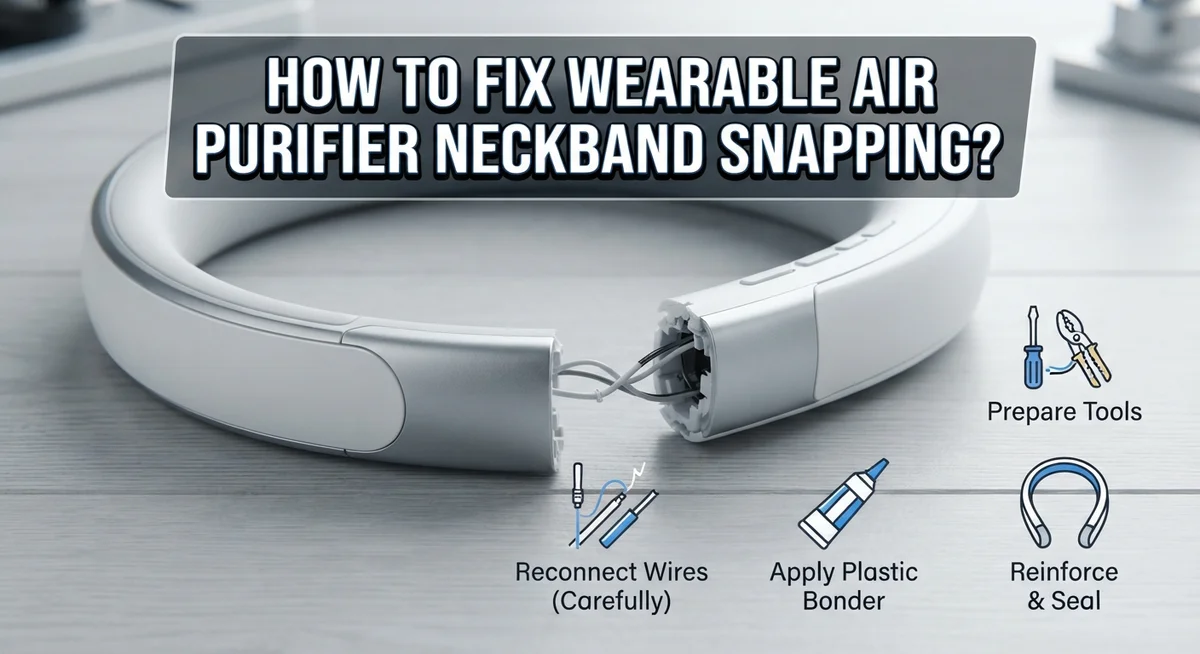
How To Fix Wearable Air Purifier Neckband Snapping?
Your wearable air purifier keeps you breathing cleaner air on the go. But what happens when the neckband snaps right when you need it most?
This is a common problem for many users. The lanyard connects your device through small pebble hooks. Over time, tension and wear can cause it to break.
A snapped neckband does not mean your device is ruined. In most cases, you can fix it quickly at home. You just need to understand why it happened first.
In a Nutshell
- Check the lanyard first. Most snapping happens at the conductive lanyard connection, not the device itself. Look closely at the pebble hooks for loose threads or worn spots.
- Reattach the lanyard through the hooks with a firm, snug fit. A loose connection puts extra strain on the band and causes it to snap again.
- Avoid overstretching the neckband when you put it on or take it off. Gentle handling extends its lifespan significantly.
- Position matters too. Keep the device 20 to 30cm from your nose at chest height. Wrong placement adds unnecessary tension on the band.
- Test the activation button after any repair. This confirms the ionizer still works correctly before you head out.
- Follow your user manual for exact adjustment steps. Each brand, like Respiray Wear A+, has slightly different hook designs.
With these quick checks, you can spot the exact snapping cause and fix it fast. Most repairs take just a few minutes.
Understanding Your Wearable Air Purifier’s Neckband Design
Your wearable air purifier’s neckband works as the main support system for the device. It holds the purifier at the right distance from your nose and mouth. This positioning is critical for effectiveness.
The neckband connects to your device through small hooks or attachment points. These hooks grip a conductive lanyard that you wear around your neck. The lanyard transfers the device’s weight evenly across your shoulders and neck.
Most neckbands use flexible materials designed to bend without breaking. However, the stress points where the lanyard connects to the device face the most strain. These connection areas experience repeated tension every time you put on or remove your purifier.
The device itself sits at your chest height, roughly 20 to 30 centimeters from your nose. This distance matters because wearable air purifiers use ionization technology. They release ions into your personal breathing zone rather than filtering air like traditional HEPA systems.
Understanding this design helps you see why snapping happens. When you stretch the neckband too hard during wear, you force extra pressure on the connection hooks. When you pull the lanyard at odd angles, the stress concentrates in one spot instead of spreading evenly.
The hooks are typically made from plastic or reinforced materials. They’re strong under normal use but can crack under sudden jerks or twists. Your user manual shows the exact hook locations on your specific model.
Proper attachment technique prevents most snapping issues. The lanyard should sit comfortably on your neck without tension. Your device hangs naturally at chest level when worn correctly.
Knowing these design basics helps you identify where problems start. You can then apply the right fix for your particular situation.
Common Causes of Neckband Snapping
Neckband snapping happens for specific reasons. Understanding these causes helps you prevent future damage and fix current problems quickly.
Material fatigue is the most common culprit. Your neckband flexes every time you put on or remove your device. Over months of repeated bending, the plastic or rubber material weakens. Eventually, it snaps under normal stress. This is especially true if you stretch the neckband too far when adjusting it around your neck.
Improper lanyard attachment creates uneven tension on the neckband. When the conductive lanyard doesn’t sit securely through the pebble hooks, pressure concentrates in one spot. That weak point then breaks under your device’s weight. The lanyard should thread firmly and evenly through both attachment points.
Incorrect positioning also strains the neckband. If you wear your device too low or too high, the neckband bends at awkward angles. This unusual stress fractures the material faster than normal use would. Your device works best at chest height, about 20 to 30 centimeters from your nose.
Poor quality materials play a role in some cases. Not all neckbands use equally durable plastics or rubber compounds. Some break more easily than others after normal wear and tear.
Sudden impacts or pressure can cause immediate snapping. Dropping your device, sitting on it, or squeezing it accidentally breaks weak spots instantly. Even gentle pressure on a worn neckband causes sudden failure.
Temperature changes affect material flexibility too. Extreme heat or cold makes plastic brittle and less forgiving. Cold weather especially makes neckbands more prone to snapping.
Identifying which cause applies to your situation helps you choose the right fix and prevent it from happening again.
Step-by-Step Guide to Reattaching a Snapped Neckband
Reattaching a snapped neckband requires patience and attention to detail. Start by examining both pieces of the broken neckband carefully. Look for the attachment hooks on your device where the lanyard connects.
Gather your materials first. You will need the neckband pieces, the conductive lanyard, and your device. Make sure the hooks on your device are intact and not bent or cracked. If hooks are damaged, the neckband will snap again after reattachment.
Clean the attachment area. Remove any dust or debris from the hooks. This helps you see exactly where the lanyard threads through. The lanyard must pass through these hooks with a firm, snug fit.
Thread the lanyard carefully. Insert the lanyard through the first hook, then through the second hook. Pull the lanyard tight but do not overstretch it. The tension should be firm enough to hold the device securely, yet flexible enough to bend slightly when you move.
Position the device correctly. Once attached, the device should sit at your chest height, about 20 to 30 centimeters from your nose. This positioning keeps the device in your breathing zone and reduces strain on the neckband.
Test the fit before wearing. Gently pull on the neckband to check the attachment strength. The lanyard should not slip through the hooks. Press your activation button to confirm the device still functions normally.
Adjust the lanyard length as needed. The neckband should feel comfortable around your neck without excessive tension. Proper fit prevents future snapping and ensures the device works effectively. Refer to your user manual for specific adjustment guidance unique to your model.
Proper Lanyard Adjustment Techniques to Prevent Future Snapping
Proper lanyard adjustment is the key to preventing your neckband from snapping again. The lanyard carries most of the weight and stress, so getting the tension right matters greatly.
Start by examining how the lanyard threads through your device’s hooks. The lanyard should pass through both attachment points evenly. Uneven threading creates one side bearing more weight than the other, which strains the neckband until it breaks.
Adjust the lanyard length to match your neck size. The device should rest at chest height, about 20 to 30 centimeters from your nose. If the lanyard is too tight, it pulls the neckband at sharp angles. If it’s too loose, the device swings and jerks during movement, creating sudden stress points.
When you wear the device, the lanyard should feel snug but not restrictive. You should fit one finger comfortably between the lanyard and your neck. This balance prevents both excessive tension and unwanted movement.
Check the lanyard regularly for signs of wear. Look for fraying, stretching, or discoloration. A damaged lanyard won’t distribute weight properly, which transfers stress back to the neckband.
Adjust the lanyard slightly each time you wear the device. Your neck size changes throughout the day based on posture and activity level. A small adjustment takes seconds but prevents major snapping issues.
Store your device with the lanyard in a relaxed position. Don’t leave it coiled tightly or stretched out. Proper storage keeps the lanyard flexible and ready for daily use.
These simple adjustment techniques keep your neckband safe and your device secure for months of reliable use.
Correct Device Positioning for Optimal Breathing Zone Coverage
Correct positioning of your wearable air purifier neckband is essential for both device durability and breathing zone coverage. The device works best when positioned at your chest height, approximately 20 to 30 centimeters away from your nose. This distance allows the ionization technology to protect your personal breathing zone effectively.
Start by adjusting your conductive lanyard so the device hangs naturally at chest level. The lanyard should feel snug around your neck but never tight or restrictive. When positioned correctly, the device sits comfortably without pulling downward or tilting to either side.
Uneven positioning causes stress on the neckband attachment points. If your device hangs too low, gravity creates constant downward tension. If it sits too high, the lanyard pulls at an awkward angle. Both situations increase snapping risk significantly.
Check your device positioning each time you wear it. Your clothing thickness changes seasonally, which affects how the lanyard sits. A sweater requires different lanyard adjustment than a t-shirt. Make small adjustments as needed to maintain that 20 to 30 centimeter distance from your breathing zone.
Proper positioning also improves device effectiveness. When the neckband sits at the correct height, ionization reaches your nose and mouth optimally. Poor positioning means the purification zone misses your breathing area entirely.
Monitor the lanyard attachment hooks regularly. These connection points experience the most stress when positioning is incorrect. Look for any signs of bending, cracking, or loosening at the hooks. Catching these problems early prevents complete neckband snapping.
Your device manual provides specific positioning guidance for your model. Review it periodically to ensure you maintain correct chest height positioning throughout regular use.
Mistakes That Weaken Neckband Attachment Over Time
Your wearable air purifier neckband snaps due to specific habits and mistakes you may not realize you’re making. Understanding these errors helps you protect your device from future damage.
Yanking the device too hard is one of the biggest culprits. Many people pull their neckband when removing it quickly. This sudden force puts extreme stress on the attachment points where the lanyard connects to the device hooks. Over time, repeated yanking weakens the connection until it snaps.
Twisting the lanyard while wearing your device causes gradual damage. When you move your head side to side or adjust the device position, the lanyard can twist around itself. This creates tension that the material cannot handle indefinitely. The conductive lanyard material degrades faster when twisted repeatedly.
Storing your device incorrectly accelerates neckband failure. Leaving the lanyard stretched tight or coiled tightly around the device puts constant pressure on attachment points. The material loses its flexibility and becomes brittle over months.
Exposing the lanyard to extreme temperatures weakens its structural integrity. Heat and cold make the conductive material less flexible. This reduced flexibility means the lanyard cannot absorb the small movements and tugs that happen during normal wear.
Ignoring early warning signs is perhaps the most common mistake. Fraying edges, slight discoloration, or loose hooks indicate the attachment is failing. Many people continue wearing the device without addressing these issues. By the time the neckband snaps completely, the damage is irreversible.
Improper threading during initial setup also matters. If you don’t thread the lanyard securely through both hooks from the start, the attachment is weak. The device may shift during wear, creating uneven stress distribution that leads to snapping.
Troubleshooting Persistent Neckband and Hook Issues
When your wearable air purifier neckband keeps snapping, persistent issues often point to deeper problems with how you’re using or maintaining the device. Understanding these root causes helps you fix the problem permanently.
Hook damage is a common culprit. The small pebble hooks that hold your conductive lanyard can crack or bend from repeated stress. Inspect both hooks carefully for visible damage, cracks, or bending. If you notice deformation, the hooks may no longer grip the lanyard securely. This causes the neckband to slip and eventually snap under tension.
Lanyard material degradation happens faster than you might expect. Even quality conductive lanyards weaken over time from daily wear, sweat exposure, and temperature changes. Run your fingers along the entire lanyard length to feel for weak spots, thinning sections, or brittleness. A lanyard that feels stiff or inflexible is near failure.
Attachment point stress develops when your device positioning shifts throughout the day. As you move, sit, or bend, uneven weight distribution pulls on one side of the neckband more than the other. This creates a stress point that eventually fails. Check if one hook bears more load than the other.
Moisture accumulation inside the hook mechanisms causes corrosion and weakening. Sweat and humidity seep into the attachment points, especially if you wear your device during exercise. Let your device dry completely after each use, and store it in a dry location.
Repeated repositioning during wear creates micro tears in the lanyard attachment. Each time you adjust the device, you stress the connection points slightly. These small damages compound over weeks and months.
Address these persistent issues by rotating between properly fitted lanyards, allowing full drying time between uses, and minimizing daily adjustments once you achieve the correct fit.
Maintenance Tips to Extend Neckband Lifespan
Your wearable air purifier neckband lasts longer when you follow simple maintenance habits. Regular cleaning keeps the attachment points strong and prevents material breakdown. Wipe the conductive lanyard with a soft, dry cloth at least twice a week to remove dust and sweat buildup.
Store your device in a cool, dry place away from direct sunlight and heat sources. Extreme temperatures weaken the lanyard material over time. Keep the device in a protective pouch or small box to prevent accidental crushing or bending of the pebble hooks.
Inspect the attachment hooks every few days for early signs of damage. Look for cracks, bends, or loose threading where the lanyard connects. Catching problems early stops small issues from becoming complete neckband failure.
Avoid storing your device in damp environments like bathrooms or gym bags with wet towels. Moisture seeps into the hook mechanisms and causes corrosion. If your device gets wet, dry it completely before storage.
Handle the lanyard gently during daily wear and removal. Never yank the device off your neck or twist the lanyard while it’s attached. Smooth, careful movements preserve the structural integrity of both the hooks and the conductive material.
Check your lanyard tension monthly to ensure it remains secure. A properly fitted lanyard reduces stress on the attachment points during normal movement. Loose lanyards shift and tug on the hooks, creating wear patterns that lead to snapping.
Replace the lanyard proactively if you notice any fraying or discoloration. Many users wait until complete failure occurs, but early replacement prevents sudden breakage during use. This simple maintenance step extends your device lifespan significantly.
Final Thoughts
A snapping neckband usually points to small habits that add up over time. Simple awareness helps you catch problems early. You do not need to be an expert to protect your device.
Regular checks make a big difference. Look at your hooks and lanyard often. Notice cracks, fraying, or looseness before they become bigger problems.
Good positioning matters just as much as good maintenance. Keep your device at chest height and within the right breathing zone. This reduces strain on the lanyard and hooks.
Remember that these devices work through ionization, not traditional filtration. Their effectiveness depends on proper placement, not just a secure neckband. A broken lanyard means no protection at all.
Your daily habits shape how long the neckband lasts. Gentle handling, correct storage, and mindful movement all reduce stress on the attachment points. Small changes create lasting results.
If snapping continues despite your best efforts, check your user manual again. Devices like the Respiray Wear A+ often have specific setup guidelines. Following these instructions closely can prevent repeated failures.
Think of neckband care as part of your daily routine. Just like charging your device, checking the lanyard should become second nature. This simple step keeps your purifier ready when you need it.
In the end, a durable neckband depends on your consistency. Careful attachment, mindful wear, and quick fixes for small issues go a long way. These steps help you avoid frustration and keep your device working as intended.
Wearable air purifiers offer a personal layer of protection when used correctly. Taking care of the neckband ensures you get the most out of your device every day. Consistency truly is the key to long term durability.
Frequently Asked Questions
Why does my neckband keep snapping even though I’m careful?
Neckband snapping usually happens because of stress on the attachment points. The small pebble hooks hold your conductive lanyard, and they experience tension every time you wear and remove your device. Over time, this repeated stress causes the hooks to weaken or crack.
Your positioning throughout the day also matters. When your device shifts around your neck, it creates uneven pressure on the lanyard. This pulls the attachment points in different directions, which speeds up wear and tear.
What’s the best way to attach the lanyard to prevent snapping?
Thread the conductive lanyard securely through both pebble hooks on your device. Make sure it sits flat and doesn’t twist. The lanyard should feel snug but not overly tight around your neck.
Proper tension is key. If the lanyard is too loose, your device bounces around. If it’s too tight, you’re putting extra stress on the hooks themselves. Find the middle ground where your device stays still but feels comfortable.
Can I replace just the neckband or lanyard?
Yes, you can replace the lanyard separately in most cases. Check your user manual to find the correct replacement lanyard type. When you install a new one, thread it carefully through the hooks without forcing it.
If the hooks themselves are cracked or bent, you may need to replace the entire device. Damaged hooks can’t hold a new lanyard properly.
How often should I inspect my neckband for damage?
Check your attachment hooks every few days. Look for cracks, bending, or discoloration on the lanyard itself. Early detection stops small problems from becoming big ones.
If you notice fraying or weak spots, replace the lanyard right away. This prevents unexpected snapping during your day.
Hi, I’m Rosie Tate — a tech enthusiast, gadget geek, and the creator of RapidConvertLab! 🚀 I’ve spent years exploring the ever-evolving world of electronics, smart devices, and Amazon’s hidden tech treasures. Through my honest, hands-on reviews, I help everyday shoppers cut through the noise and pick gadgets that truly deliver value. When I’m not testing a new device, I’m probably unboxing one! 📦✨