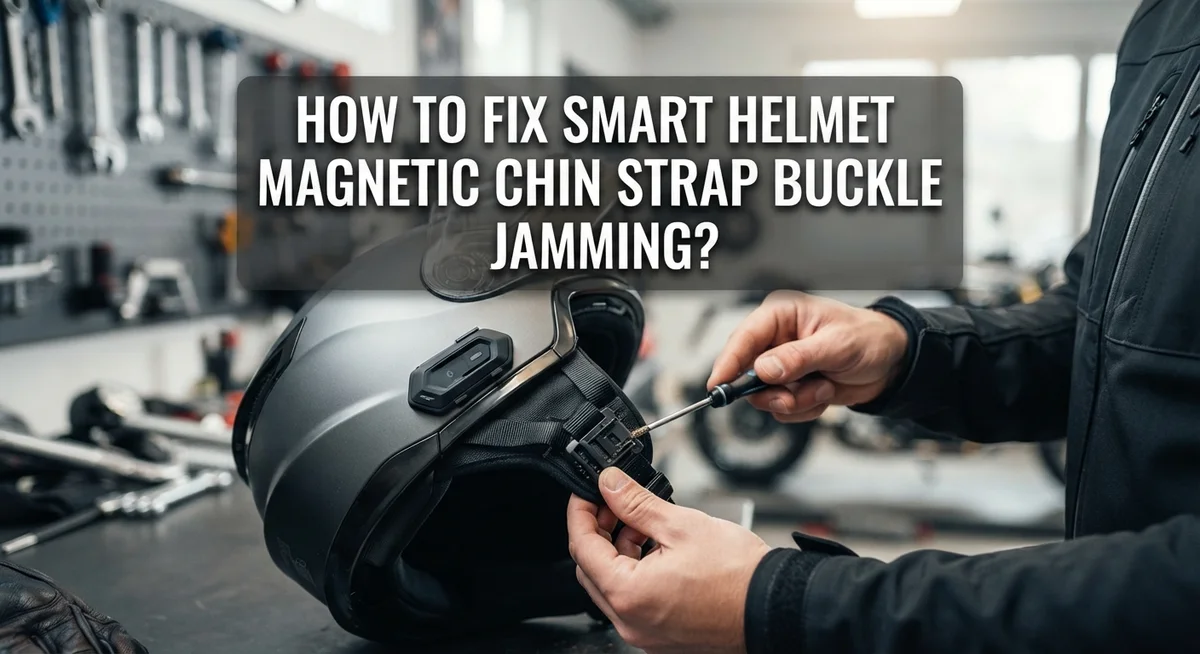
How To Fix Smart Helmet Magnetic Chin Strap Buckle Jamming?
Your smart helmet should snap shut in seconds. But sometimes that magnetic chin strap buckle just won’t cooperate.
You align the pieces. You hear a click. Yet the buckle still feels stuck or won’t lock properly.
This jamming issue happens more often than you’d think. Magnetic buckles rely on a clever two-stage system. Magnets guide the pieces into place first. Then a mechanical lock secures everything for real safety.
When either stage fails, you get frustrated fumbling before every ride.
In a Nutshell
- Check your Y-straps first. Adjust the slider buckles so they form a snug V-shape below your ears. Loose straps often cause buckle misalignment.
- Clean the magnetic components. Dirt, dust, and debris stop magnets from aligning properly. Wipe both pieces with a soft cloth before every ride.
- Let the magnets guide, then listen for the lock. The magnets pull pieces into place. The mechanical lock is what actually secures your helmet.
- Verify your helmet fit. A wrong size or poor liner seating puts extra strain on the buckle. This strain leads to jamming over time.
- Avoid quick fixes like tape or knots. These damage the mechanism further. They also void your safety certification.
- Trim excess strap correctly. Cut it neatly without using zip ties or drilling holes. Sloppy trimming can catch in the buckle.
- Contact the manufacturer for parts. If the buckle stays jammed, request a replacement. This keeps your helmet safe and functional.
How Magnetic Chin Strap Buckles Work
Magnetic chin strap buckles use a two stage system to keep your helmet secure. The first stage involves magnets that guide the two pieces into proper alignment. Once aligned, a mechanical locking mechanism engages to hold everything firmly in place.
Understanding this design helps you fix jamming issues faster. The magnets act like invisible hands. They pull the buckle components toward each other and into the correct position. This magnetic guidance makes fastening quick and intuitive for riders.
The mechanical lock is what actually secures your helmet. Magnets alone cannot hold your helmet safely. Once the pieces snap together magnetically, the locking mechanism clicks into position. You should hear and feel this satisfying snap when everything works correctly.
When jamming occurs, one of these two stages has failed. Maybe the magnets no longer align the pieces properly. Or perhaps the mechanical lock won’t engage after magnetic alignment. Either problem prevents smooth fastening.
The Y shaped chin straps connect to this buckle system. These straps form a V shape that sits below your ears. Proper strap adjustment directly affects how well the buckle components meet. Loose straps mean misaligned buckle pieces, which causes jamming.
Your helmet’s fit also matters significantly. A helmet that sits too high or too low changes how the chin strap angles. This angle shift can prevent proper buckle alignment. The liner padding inside your helmet affects fit too.
Clean magnetic surfaces regularly. Dirt and debris accumulate on the magnets and locking mechanism. This buildup creates friction that prevents smooth engagement. A simple wipe with a dry cloth often solves jamming problems immediately.
Knowing how these buckles function helps you identify where problems start. This knowledge guides you toward the right fix for your specific jamming issue.
Signs Your Buckle Is Jamming or Misaligned
Your smart helmet buckle sends clear warning signs before it completely fails. Learning to spot these signals helps you fix problems before your ride.
Listen for the snap. A healthy buckle clicks firmly when you close it. If you hear nothing or a weak sound, the mechanical lock isn’t engaging properly. This means the two stage system has broken down somewhere.
Feel the resistance. When you push the magnetic components together, they should glide smoothly into place. Jamming feels like fighting against the buckle. You might need to wiggle it, push harder than normal, or try multiple times to get it to close. This friction indicates misalignment or debris blocking the path.
Check for gaps. After fastening, inspect where the two buckle pieces meet. They should sit flush against each other with no visible space. Gaps mean the mechanical lock didn’t fully engage. Your helmet could come loose during a ride.
Test the security. Once closed, gently pull the buckle apart with your fingers. A properly locked buckle resists this pressure firmly. If it separates easily or feels loose, the locking mechanism has failed.
Notice the delay. The magnets should guide alignment instantly. If you experience hesitation or the buckle feels sluggish, magnetic components may have dirt buildup or internal damage.
Observe strap behavior. Your Y straps should hold their shape and position. Loose or drooping straps suggest the buckle isn’t gripping properly, even if it appears closed.
These signs tell you exactly what needs attention. Act quickly when you notice them. Small problems become dangerous issues if ignored.
Step-by-Step: Diagnosing the Jam
Start by examining your chin straps carefully. Look at both the left and right Y-straps that connect to your buckle. These straps should form a snug V-shape below your ears when properly adjusted.
Check if your straps are loose or sliding around. Loose straps are the most common cause of buckle jamming. Adjust the slider buckles on each strap until they feel firm against your face. The V-shape should be tight enough to keep your helmet stable.
Next, inspect where the magnetic components meet. Look for dirt, lint, or debris stuck on the metal surfaces. Even small particles prevent magnets from aligning correctly. Wipe both sides of the buckle gently with a dry cloth.
Test the magnetic alignment by slowly pushing the buckle pieces together. They should snap together smoothly without resistance. If you feel grinding or sticking, stop and clean the surfaces again.
Listen carefully when you close the buckle. A healthy buckle makes a clear clicking sound when the mechanical lock engages. If you hear nothing or a dull thud, the locking mechanism may have issues.
Check your helmet’s overall fit too. An ill-fitting helmet can cause straps to sit at wrong angles, forcing the buckle to jam. Make sure your helmet sits level on your head and the liner feels snug.
After fastening, gently pull the buckle apart with your fingers. It should resist your pull firmly. If it opens easily, the mechanical lock isn’t engaging properly.
Document what you observe. Does the jamming happen every time or just occasionally? Does it jam during closing or opening? This information helps you identify the exact problem before contacting support.
Step-by-Step: Fixing the Buckle and Realigning Straps
Start by loosening your Y straps completely. This gives you room to work and prevents accidental pressure on the magnetic components. Slide both adjusters down toward the buckle so the straps hang naturally.
Next, position your helmet on your head and fasten it without tightening. The magnetic components should snap together smoothly. If they resist or feel sticky, stop and inspect the surfaces.
Check both magnetic pieces for dirt, dust, or debris. Wipe them gently with a soft, dry cloth. Even small particles prevent proper alignment and cause jamming. Pay special attention to the edges where the magnets meet.
Now reposition the buckle pieces and allow them to snap together naturally. Don’t force them. The magnets should guide the components into place with minimal effort. If resistance continues, the internal mechanism may need professional attention.
Once the buckle closes properly, adjust your Y straps to form a snug V shape below your ears. The slider buckles control strap length. Pull each strap firmly and lock it in place. Your chin strap should feel secure but not uncomfortably tight.
Perform a final security test by gently pulling the closed buckle with your fingers. It should resist your pull. The mechanical lock holds everything in place while the magnets maintain alignment.
Check your helmet fit one more time. An improperly sized helmet or poorly seated liner can create pressure that affects buckle performance. Ensure your helmet sits level on your head and the interior padding contacts your skull evenly.
If jamming persists after these steps, the buckle mechanism likely needs replacement. Contact your helmet manufacturer for genuine replacement parts and installation guidance.
Proper Y-Strap and Fit Adjustment Tips
Proper Y strap adjustment forms the foundation of a secure chin strap system. Your straps must create a snug V shape below your ears to keep the helmet stable and allow the magnetic buckle to function correctly.
Start by loosening both Y straps completely before you put on your helmet. This gives you room to work and prevents the straps from twisting or tangling. Place your helmet on your head and fasten it without tightening anything yet.
Now adjust each strap individually using the slider buckles. Pull each side so the straps sit snugly against your jaw without cutting off circulation. The straps should form a gentle V that guides the magnetic buckle into proper alignment.
Check that the helmet sits level on your head. An uneven fit causes the buckle to misalign and jam. If your helmet rocks forward or backward, loosen the straps and reposition the helmet before tightening again.
Test the fit by opening and closing your mouth. You should feel slight pressure but no pain. If straps feel too tight, you risk damaging the magnetic components when you close the buckle.
After adjusting both sides, perform a security test. Gently pull the closed buckle with your fingers. It should resist movement but not feel locked in place by the straps alone.
Verify strap tension one final time. Loose straps allow the buckle pieces to misalign before the magnets can guide them together. Tight straps prevent the magnets from engaging smoothly.
Remember that proper fit depends on your helmet size too. An oversized or undersized helmet cannot be corrected by strap adjustment alone. If jamming continues after these adjustments, inspect your buckle for damage or contact the manufacturer for replacement parts.
Common Mistakes That Cause or Worsen Jamming
Many people accidentally make their jamming problem worse by using quick fixes that damage the buckle system. Tape, knots, and zip ties are common culprits. These materials wrap around the magnetic components and prevent them from aligning properly.
Drilling holes or adding extra clips also causes serious damage. Your buckle relies on precise magnetic guidance followed by mechanical locking. Any modification interferes with this two stage process and makes jamming worse.
Loose chin strap syndrome is the biggest mistake you can make. People often skip proper Y strap adjustment because they think the magnets alone will hold everything secure. This is incorrect. The magnets only guide alignment. They do not provide actual security by themselves.
When your Y straps stay loose, the buckle pieces cannot stay in position long enough for the mechanical lock to engage. The magnetic components drift apart before they snap together completely. This creates jamming and a false sense that your buckle is broken.
Ignoring your helmet’s overall fit is another major error. If your helmet sits unevenly on your head or your liner has shifted, the buckle automatically misaligns. People often blame the buckle when the real problem is improper helmet positioning.
Rushing through buckle closure also worsens jamming. You must allow the magnetic pieces to snap together naturally at their own pace. Forcing them together or closing too quickly prevents the mechanical lock from engaging smoothly.
Finally, avoid using homemade stitching or fabric glue to keep straps in place. These solutions trap dirt and debris inside your buckle mechanism. Dirt buildup is one of the fastest ways to create permanent jamming problems that require professional buckle replacement.
When to Contact Manufacturer Support for Replacement Parts
When your smart helmet’s magnetic chin strap buckle keeps jamming despite your best efforts, it’s time to reach out to the manufacturer. This step makes sense after you’ve cleaned the magnetic components, adjusted your Y straps properly, and tested the closure multiple times without success.
Contact the manufacturer’s customer service team directly. Most helmet makers offer replacement buckle kits for situations exactly like this. Have your helmet’s model number and purchase date ready when you call. This information helps them identify the correct replacement parts for your specific helmet version.
Explain the jamming issue clearly. Tell them whether the buckle sticks when closing, won’t snap together, or feels loose after fastening. Describe what you’ve already tried, including cleaning and strap adjustments. This background helps technicians determine if you need a complete buckle replacement or just specific magnetic components.
Ask about warranty coverage before ordering parts. Many manufacturers cover buckle replacements within the first year of purchase. Some offer discounted replacement kits even after the warranty expires. Get a clear answer about shipping costs and delivery timeframes.
Request detailed installation instructions when you receive your replacement buckle. Some manufacturers include video guides or step by step photos with their parts. Follow these instructions precisely to ensure proper installation.
If the replacement buckle arrives and you’re unsure about installation, contact the manufacturer again. Their support team can walk you through the process or recommend a local helmet shop for professional installation.
Don’t attempt to force or modify the original buckle further. Damage from improper fixes often voids your warranty and makes the helmet unsafe to wear.
Maintenance Tips to Prevent Future Jamming
Regular maintenance keeps your smart helmet’s magnetic chin strap buckle working smoothly. Start by cleaning the magnetic surfaces every two weeks with a soft, dry cloth. Dirt and dust block the magnets from guiding components into proper alignment.
Check your strap tension monthly. Loosen both Y straps completely, then readjust them to form a snug V shape below your ears. This simple habit prevents the loose strap syndrome that causes jamming.
Inspect the buckle mechanism for visible damage or wear. Look at both the magnetic piece and the mechanical lock section. If you notice cracks, dents, or bent metal parts, these reduce how well the magnets can guide alignment.
Store your helmet in a cool, dry place away from extreme heat. High temperatures can weaken the magnetic strength over time. Never leave your helmet in direct sunlight for extended periods.
Avoid exposing the buckle to water and moisture. While most smart helmets resist light rain, standing water damages the magnetic components. Dry the buckle completely after wet weather exposure.
Check your helmet’s overall fit every few months. An ill fitting helmet shifts during wear, which misaligns the buckle pieces. Verify that your liner sits properly and hasn’t compressed unevenly.
Never force the buckle closed if it feels stuck. Forcing it causes internal damage to both the magnetic and mechanical components. Instead, stop and realign the strap position gently.
Replace worn Y straps before they become too loose. Frayed or stretched straps cannot maintain the tight V shape needed for proper buckle engagement. Contact your manufacturer for replacement strap kits when needed.
Final Thoughts
Fixing a jammed magnetic chin strap buckle does not need to feel hard. Most problems come from loose Y straps or skipping the proper alignment steps.
Remember that magnets only guide the buckle pieces into place. The mechanical lock is what actually keeps your helmet secure.
Take your time when fastening your helmet. Let the magnets align fully before you press the buckle closed.
Check your strap tension often. A snug V shape below your ears helps the buckle pieces meet correctly every single time.
Avoid quick fixes like tape, knots, or extra clips. These damage the buckle system and often make jamming worse over time.
If your buckle still jams after trying these steps, do not force it. Reach out to your helmet’s manufacturer for support.
Most brands offer replacement buckle kits. Many also cover these parts under warranty during the first year of ownership.
Simple monthly maintenance goes a long way too. Inspect your buckle for wear, keep it dry, and store your helmet properly.
Your helmet’s fit also plays a big role in buckle performance. Recheck your fit every few months, especially if your liner has compressed.
Small habits prevent most jamming issues before they start. A few extra minutes during each ride can save you real frustration later.
Smart helmet buckles are built to work with your movements, not against them. When you understand how the magnetic and mechanical systems work together, fixing small issues becomes much easier.
Stay patient, follow proper adjustment steps, and contact support when needed. Your buckle will keep working smoothly for many rides ahead.
Frequently Asked Questions
Why does my magnetic chin strap buckle jam when I try to fasten it?
Jamming usually happens when the magnetic components don’t align properly. The buckle uses two stages: magnets guide the pieces into position, then a mechanical lock secures them. If your strap sits too loose or your helmet doesn’t fit snugly, the buckle won’t align correctly. Check that both Y straps form a tight V shape below your ears before fastening.
Can I fix a jammed buckle by forcing it closed?
No. Never force a stuck buckle. Forcing it can damage the internal locking mechanism permanently. Instead, stop and loosen the Y straps completely. Readjust them to create proper tension, then try fastening again slowly. Allow the magnets time to guide the buckle into alignment naturally.
What’s the difference between magnetic guidance and the actual lock?
The magnets pull the buckle pieces toward each other for alignment. Once aligned, a mechanical lock engages to keep your helmet secure. The magnets don’t lock anything by themselves. Both systems must work together. If magnets align the buckle but it still feels loose, your mechanical lock may need adjustment or replacement.
How often should I check my chin strap buckle for problems?
Inspect your buckle monthly. Loosen both Y straps completely, then readjust them to form that snug V shape. Look for visible cracks, wear, or debris around the buckle. Check that strap tension stays firm after fastening. Monthly checks catch small issues before they become jamming problems.
What should I do if my buckle keeps jamming after these fixes?
Contact your helmet manufacturer’s customer service team. Most brands offer replacement buckle kits. Explain your jamming issue clearly and ask about warranty coverage. Many manufacturers cover replacements within the first year. Request installation instructions with your replacement parts.
Hi, I’m Rosie Tate — a tech enthusiast, gadget geek, and the creator of RapidConvertLab! 🚀 I’ve spent years exploring the ever-evolving world of electronics, smart devices, and Amazon’s hidden tech treasures. Through my honest, hands-on reviews, I help everyday shoppers cut through the noise and pick gadgets that truly deliver value. When I’m not testing a new device, I’m probably unboxing one! 📦✨