How To Fix Smartwatch Crown Dial Getting Stiff To Turn?
Your smartwatch crown once turned so smoothly. Now it feels rough, tight, or stuck. This little dial matters a lot.
You use it to scroll menus, adjust settings, and zoom into maps. When it gets stiff, your whole experience feels frustrating.
Dust, dirt, and moisture are common culprits behind this problem. Sometimes it is simply wear and tear from daily use.
The good news? You do not need to rush to a repair shop right away. Many crown issues can be fixed at home with simple steps.
In a Nutshell
- Stiffness usually points to buildup, not a broken part. Small particles get stuck around the crown stem and stop it from spinning freely.
- A soft brush works wonders for loosening trapped grime. Gently brush around the crown base in small circles.
- Warm water and mild soap can help clear stubborn residue. Just make sure your watch is water resistant before you try this step.
- Turning the crown while cleaning helps push out hidden dirt. Rotate it slowly in both directions as you clean.
- Drying thoroughly matters just as much as cleaning. Moisture left behind can cause rust or fresh stiffness later.
- Regular maintenance prevents future issues. A quick wipe down after workouts or dusty days keeps the crown turning smoothly.
- If stiffness continues after cleaning, deeper internal issues might be the cause. That is your cue to seek professional help.
Understanding the Crown Dial and How It Works
Your smartwatch crown is a small rotating dial located on the side of your device. You use it to navigate menus, adjust volume, and control zoom functions. Think of it like the crown on a traditional watch, but designed for digital control instead of time setting.
The crown works through a mechanical system inside your smartwatch. When you turn it, sensors detect the rotation direction and speed. Your device then responds by scrolling up or down through options on the screen. This simple mechanism makes it one of the most frequently used features on your watch.
The crown dial sits partially exposed on your watch’s exterior. This design choice makes it easy to access, but it also means the dial contacts your skin, pocket lint, and environmental particles throughout the day. Over time, these materials accumulate around the rotating mechanism.
Inside the crown housing, you will find a shaft that connects to internal gears and sensors. When dirt and debris settle into this tight space, they create friction. The friction builds up gradually, making each turn feel harder than the last. This is why your crown feels stiff even though nothing is actually broken.
Understanding this structure helps you see why cleaning works so well. The stiffness comes from external buildup pressing against the rotating parts, not from internal damage. By removing this buildup, you restore smooth operation.
Your crown also has a rubber or silicone seal around its base. This seal tries to keep debris out, but it cannot block everything. The seal can wear down over time, allowing more particles to enter. Regular cleaning helps you maintain the crown’s performance and extends the life of this important feature on your smartwatch.
Common Causes of a Stiff Crown Dial
Dust accumulation is the most common reason your crown dial becomes stiff. When you use your smartwatch daily, tiny particles settle around the crown’s base. These particles get trapped between the rotating dial and the fixed housing. Over time, they form a gritty layer that blocks smooth movement.
Moisture causes significant problems too. Sweat from your wrist, humidity, and water exposure seep into the crown mechanism. This moisture mixes with dust to create a sticky paste. The paste hardens and prevents the crown from turning freely.
Salt residue is another culprit many people overlook. If you wear your smartwatch while exercising or near the ocean, salt deposits accumulate. Salt crystallizes around the crown’s moving parts. This crystallization creates friction that makes turning difficult.
Dried soap or cleaning product buildup happens more often than you think. When you wash your hands or shower with your smartwatch on, soap residue sneaks into the crown. This residue dries and hardens into a stubborn coating. The coating acts like glue between the dial and its housing.
Lint from your pocket or bag can also jam the mechanism. Fabric fibers wrap around the crown’s shaft. They compress and tighten, restricting rotation.
Finally, internal corrosion develops when moisture sits inside the crown for extended periods. The metal components oxidize and expand slightly. This expansion reduces the tiny gap needed for smooth turning.
The good news is that most of these causes respond well to basic cleaning. Understanding what caused the stiffness helps you prevent it from happening again. Regular maintenance catches problems before they worsen. Most stiffness issues resolve completely with proper cleaning techniques and preventive care going forward.
Tools and Materials You’ll Need Before Starting
Before you start fixing your stiff crown dial, gather the right tools. You don’t need expensive equipment or specialty items. Most tools sit in your home already.
Start with soft brushes. A toothbrush works perfectly for this job. You can also use a soft-bristled brush meant for cleaning electronics. Avoid wire brushes or anything rigid. Hard bristles will scratch your smartwatch crown.
Next, get cleaning liquids ready. Distilled water is your safest choice. Tap water contains minerals that leave residue behind. You’ll also want mild dish soap. Mix just a tiny amount with water. Never use harsh chemicals or alcohol based cleaners on your crown.
Gather lint-free cloths or microfiber towels. Paper towels leave fibers behind. Regular cloth works too if you don’t have microfiber. These cloths help dry your watch without introducing new particles.
Have a small container nearby. Fill it with your distilled water and soap mixture. A cup or small bowl works fine. You’ll use this for dipping your brush.
Consider getting a toothpick or wooden stick. This helps remove stubborn debris from tight spaces around the crown. Plastic or wooden tools won’t damage the metal. Avoid metal picks that could scratch your device.
Finally, prepare a dry towel or cloth. Drying thoroughly matters just as much as cleaning. Moisture left behind causes future stiffness.
Place all your tools on a clean, flat surface before starting. Good lighting helps you see what you’re doing. A desk lamp or natural sunlight works well. Having everything organized keeps you focused and prevents mistakes during the cleaning process.
Step-by-Step Guide to Cleaning and Loosening the Crown
Start by powering off your smartwatch completely. This prevents accidental input and protects your device’s electronics while you work on the crown.
Next, position your watch on a clean, flat surface with the crown facing you. Make sure you have good lighting so you can see any debris clearly.
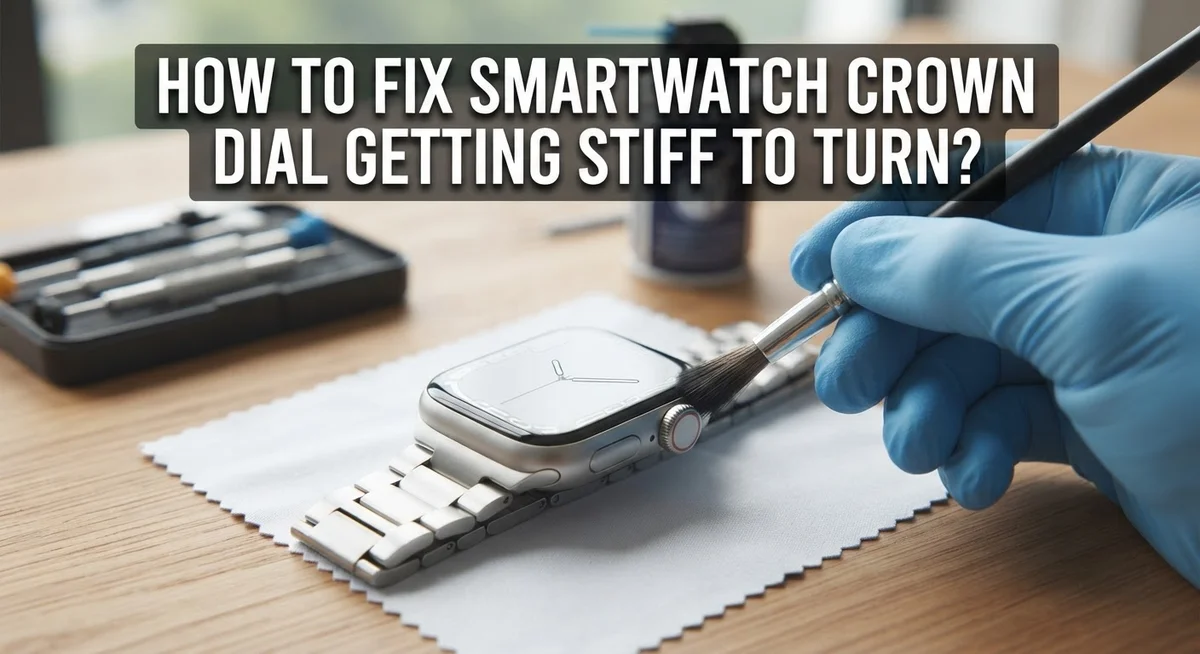
Dampen your soft brush slightly with lukewarm water. Gently brush around the crown’s base where it meets the watch case. Use circular motions to dislodge any loose dirt or lint trapped in the crevices.
Now comes the important part: slowly rotate the crown back and forth while brushing. This action pushes debris out of the mechanism instead of forcing it deeper inside. Rotate about 20 to 30 times in each direction.
Use your lint-free cloth to wipe away any moisture and loosened particles. Pay special attention to the gap between the crown and the watch body.
If you notice stubborn buildup, dip a wooden stick or toothpick in water and gently scrape along the crown’s edges. Never use metal tools as they can scratch or damage the mechanism. Work slowly and carefully around the entire perimeter.
Wipe everything dry with your towel. Make absolutely certain no moisture remains, especially in the crown’s base and surrounding areas.
Once completely dry, rotate the crown several times without any tools or brushes. Feel for improvement in how smoothly it turns. The crown should feel noticeably looser and more responsive.
If stiffness persists after this cleaning, your smartwatch may have internal damage requiring professional repair. Contact the manufacturer’s support team for assistance with deeper mechanical issues.
How to Safely Lubricate the Crown Mechanism
Once your crown is clean and dry, proper lubrication keeps it moving smoothly. This step prevents future stiffness and protects the internal mechanism from friction damage.
Start with the right lubricant choice. You need something that reduces friction without attracting dust or debris. Silicone based options work well because they don’t harden over time. Avoid thick oils or greases that trap particles inside the crown mechanism.
Apply lubricant sparingly around the crown’s base where it meets the watch housing. Use just one small drop on a clean toothpick or wooden stick. Insert the stick into the gap between the crown and the case. Rotate the crown slowly to distribute the lubricant evenly inside.
Wipe away excess immediately. Too much lubricant causes problems. Any overflow attracts lint and dust particles. Use your lint free cloth to remove drips from the crown’s exterior and the watch case. This prevents buildup that makes the crown stiff again.
Test the crown movement after lubrication. It should turn smoothly without resistance. Rotate it forward and backward several times. The motion should feel consistent and easy.
Let the lubricant settle for a few minutes before wearing your watch. This allows it to coat the internal gears and sensors properly. Avoid submerging your watch immediately after lubrication. Wait at least one hour before exposing it to water.
Reapply lubricant periodically to maintain smooth operation. Most smartwatch owners benefit from relubrication every three to six months. This depends on how often you use the crown and your environment. Frequent crown users in dusty conditions may need more frequent maintenance.
Preventive Maintenance Tips to Avoid Future Stiffness
Preventing crown stiffness starts with regular habits you can build into your daily routine. Keep your smartwatch away from excessive moisture whenever possible. Remove your watch before showering, swimming, or intense workouts where sweat accumulates around the crown area.
Dust and debris create the biggest problems for crown mechanisms. Check your crown weekly for visible particles or buildup. A quick visual inspection takes only seconds but prevents major issues later.
Rotate your crown gently every few days even when you’re not adjusting settings. This keeps the internal mechanism active and prevents lubricant from drying out. Small circular motions for just 10 seconds maintain smooth operation.
Store your smartwatch in a clean, dry location away from humid environments. Bathrooms and kitchens expose your device to moisture that sneaks into the crown. A drawer or shelf in your bedroom works better than a bathroom counter.
Avoid touching the crown with wet fingers or damp hands. Moisture entering the crown mechanism is one of the leading causes of stiffness. Dry your hands completely before adjusting any watch settings.
Consider protective cases or covers if you wear your watch in dusty environments. Construction sites, workshops, or sandy areas introduce particles that lodge around the crown. These barriers reduce direct exposure to harmful elements.
Check your watch’s water resistance rating and respect those limits. Just because your smartwatch handles splashes doesn’t mean it should stay wet for extended periods. Pat it dry immediately after any water contact.
Clean the crown area monthly with a dry cloth even if you don’t notice visible dirt. Preventive cleaning stops problems before they start. Consistency matters more than intensity when protecting your device’s longevity and functionality.
Common Mistakes to Avoid When Fixing a Stiff Crown
People often make mistakes when trying to fix a stiff crown. These errors can actually make the problem worse instead of better.
Using too much force is the biggest mistake. Many people think they need to push hard or turn the crown aggressively. This approach can damage the internal mechanism permanently. The crown contains delicate springs and gears. Rough handling breaks these components. Always use gentle, slow movements when working with your crown.
Another common error involves using the wrong cleaning tools. People grab whatever is nearby like paper towels or rough cloths. These materials leave fibers behind or scratch the crown’s surface. Always choose soft brushes and lint-free cloths specifically. Your smartwatch crown deserves care similar to eyeglasses.
Applying incorrect lubricants causes serious damage. Some people use household oils, grease, or silicone sprays. These products attract dust and create sticky buildup over time. They can also seep into the watch and damage electronics. Only use lubricants designed for watch mechanisms.
Skipping the drying step is another frequent mistake. People clean the crown then immediately apply lubricant while moisture remains. Water and lubricant don’t mix well. This combination creates a paste that blocks movement further. Always wait until your crown is completely dry before lubricating.
Ignoring water exposure prevents problems. Many people wear their smartwatch while showering or swimming without checking the water resistance rating. Moisture enters the crown mechanism and causes corrosion. This leads to permanent stiffness. Respect your watch’s specifications and keep it dry.
Finally, people neglect preventive maintenance entirely. They only address the crown when it becomes severely stiff. Regular gentle cleaning and occasional rotation prevent most problems. Building these habits into your routine saves time and frustration later.
Troubleshooting When the Crown Still Won’t Turn Smoothly
When your crown still won’t turn smoothly after basic cleaning and lubrication, deeper issues may exist. Your smartwatch crown contains tiny moving parts that can wear down over time or suffer internal damage.
Check for mechanical wear first. Press the crown gently and listen for grinding sounds. These noises mean internal components are damaged. Grinding indicates the crown’s internal gears or bearings need professional attention. You cannot fix this yourself with lubrication alone.
Test the crown’s resistance in different directions. Turn it clockwise, then counterclockwise. Does it stick only in one direction? One-way stiffness suggests debris stuck on one side of the mechanism. Try gentle, repeated small movements in the stuck direction to work out the blockage naturally.
Verify water hasn’t entered the crown mechanism. If your watch recently got wet, internal moisture could be the problem. Water inside the crown creates resistance and eventually causes corrosion. Let your watch sit in a warm, dry room for 24 to 48 hours. Place it crown-side up so moisture can escape naturally.
Apply heat gently if moisture is suspected. Sit your watch near (not on) a warm surface like a sunny windowsill. Never use direct heat sources like hair dryers, which can damage the watch.
If the crown remains stiff after these steps, internal damage has likely occurred. The crown’s seal may be broken, or internal parts need replacement. Contact your smartwatch manufacturer’s service center at this point. They have specialized tools and replacement parts you cannot access yourself. Attempting further fixes risks permanent damage to your device.
Final Thoughts
A stiff crown does not need to stay that way. Simple habits keep this small part working well for years.
Regular cleaning makes the biggest difference. A quick wipe with a dry cloth removes dust before it builds up.
Gentle rotation matters too. Turning the crown often keeps the internal gears moving freely and prevents dirt from settling.
Water exposure deserves your full attention. Always check your watch’s resistance rating before swimming or showering.
Never force a stuck crown. Forcing it can break internal parts and turn a small problem into an expensive repair.
If home fixes do not work, professional help is worth it. Watch repair technicians have tools and experience you do not have at home.
Prevention saves money and stress in the long run. Cleaning your watch monthly takes only a few minutes.
Think of crown care like brushing your teeth. Small daily actions prevent bigger problems later.
Your smartwatch tracks your health and daily activities. A working crown means you can adjust settings without frustration.
Do not ignore early signs of stiffness. Address them quickly before they become serious mechanical issues.
Every watch is different. Some models need more frequent care than others based on how you use them.
Trust your instincts here. If something feels wrong or sounds unusual, stop and check it out.
Patience matters more than speed when fixing a stiff crown. Rushing often leads to mistakes.
With the right care routine, your smartwatch crown can stay smooth for years. Small efforts now prevent bigger headaches later.
Keep these tips handy. Your watch will thank you with reliable performance every single day.
Frequently Asked Questions
Why does my smartwatch crown get stiff suddenly?
A stiff crown usually happens due to dust, dirt, or dried sweat buildup around the dial mechanism. Water exposure is another common cause. When moisture enters the crown area, it can dry and leave mineral deposits that create friction.
Over time, regular wear also causes the crown’s internal parts to shift slightly. This small movement reduces smooth rotation. Most stiffness develops gradually, so catching it early helps prevent worse problems.
Can I use regular oil to lubricate my smartwatch crown?
No. Household oils, cooking oil, and general lubricants can damage your watch’s internal components. These oils attract dust and create sticky buildup over time.
Use only watch-specific lubricants designed for delicate mechanisms. These products evaporate properly and won’t harm seals or gaskets. If you’re unsure which lubricant suits your model, check your smartwatch manual first.
What happens if I force a stiff crown to turn?
Forcing a stuck crown can break the internal gear mechanism permanently. The crown dial has tiny mechanical parts that break easily under pressure.
Once these parts fracture, your watch may need expensive repairs. Gentle, patient rotation always works better than aggressive turning. If the crown won’t budge with light pressure, stop and try cleaning instead.
How often should I clean my smartwatch crown?
Clean your crown every two weeks if you wear your watch during workouts or outdoor activities. Regular users should clean monthly at minimum.
If you expose your watch to water, sand, or dust frequently, increase cleaning to weekly. Prevention stops problems before they start. A quick 30 second cleaning session saves you from major repairs later.

Hi, I’m Rosie Tate — a tech enthusiast, gadget geek, and the creator of RapidConvertLab! 🚀 I’ve spent years exploring the ever-evolving world of electronics, smart devices, and Amazon’s hidden tech treasures. Through my honest, hands-on reviews, I help everyday shoppers cut through the noise and pick gadgets that truly deliver value. When I’m not testing a new device, I’m probably unboxing one! 📦✨