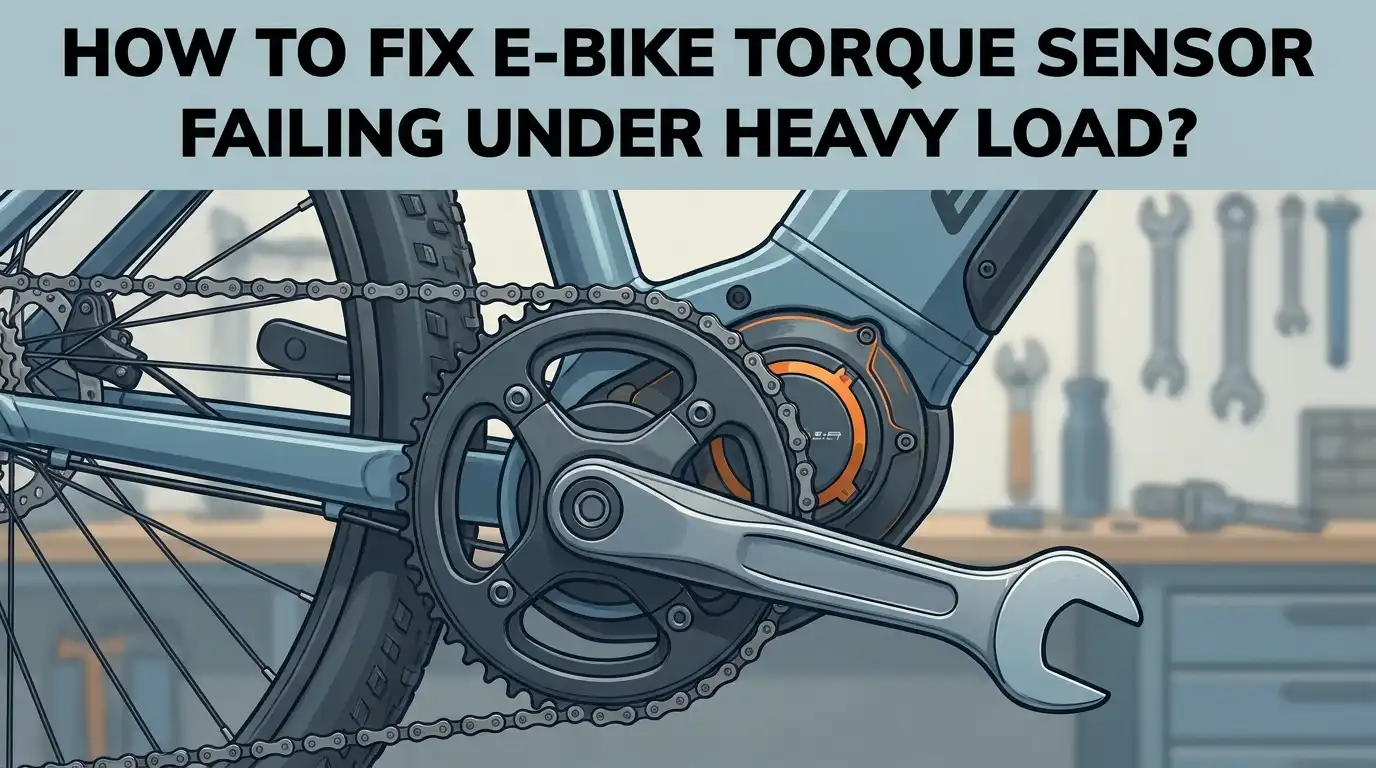
How To Fix E-Bike Torque Sensor Failing Under Heavy Load?
Does your e-bike suddenly lose power when you climb a steep hill? Or maybe it cuts out when you push hard on the pedals?
This is often a sign of a torque sensor problem. The sensor measures how much force you apply to the pedals. When it fails under heavy load, your ride becomes frustrating and unreliable.
The good news is that most torque sensor issues have simple fixes. You don’t always need a trip to the repair shop.
Dirt, loose connections, and worn parts are common culprits. Sometimes a quick system reset solves the problem in minutes.
In a Nutshell
- Reset first. Turn off your e-bike. Wait 10 seconds. Turn it back on without touching the pedals. This simple step often clears minor glitches.
- Cycle the assist modes. Switch through every mode, from Eco to max. Spend about 30 seconds on each one. This can trigger a factory reset and fix calibration errors.
- Try pedaling backward. Rotate the pedals backward a few times. Then restart your bike. This small trick sometimes resets the sensor.
- Inspect for dirt and damage. Check the sensor and crank arm closely. Look for dirt, loose connectors, or missing magnets. These are common causes of failure.
- Keep pressure even. Avoid pushing hard on just one pedal. Uneven force can confuse the sensor and cause power cuts.
- Know when to get help. If resets do not work, you may need a professional recalibration or a replacement part.
What Is a Torque Sensor and Why It Fails Under Heavy Load
A torque sensor is a small device that measures how hard you push on the pedals. It tells your e-bike motor how much power to deliver. When you pedal harder, the sensor reads more force and sends more power to the motor.
Inside the sensor sits a strain gauge. This gauge bends slightly when you apply pressure. The bend creates an electrical signal that the bike’s computer reads. This signal controls your motor speed and power output.
Why does it fail under heavy load? The strain gauge has limits. When you push extremely hard on the pedals, the gauge experiences stress beyond its normal range. This stress can cause the gauge to become less sensitive or stop responding altogether.
Heavy loads create several problems for the sensor. Repeated extreme pressure weakens the internal components over time. Dirt and moisture can get inside and interfere with the gauge’s ability to read force correctly. Loose mounting hardware allows the sensor to shift, throwing off its measurements.
Common failure signs include sudden power cuts when climbing hills, motor lag when you pedal hard, or complete loss of pedal assist. Your bike might feel like it’s not responding to your effort.
The sensor also struggles when you apply uneven pressure. Pushing hard on just one pedal instead of distributing force evenly confuses the sensor’s readings. This causes the motor to cut out unexpectedly.
Why this matters: Understanding how torque sensors work helps you prevent damage. You’ll know why applying consistent, even pedal pressure keeps your system healthy. You’ll also recognize when simple cleaning or tightening might solve the problem versus when professional help is needed.
Signs Your Torque Sensor Is Failing
A failing torque sensor shows clear warning signs when you ride hard. Sudden power cuts are the most obvious indicator. Your motor stops working right when you need it most, especially on hills or during acceleration.
Motor lag is another common sign. You push the pedals, but the motor takes several seconds to respond. This delay gets worse as you apply more force. The bike feels sluggish and unresponsive.
Inconsistent assistance happens when the sensor works sometimes but not always. You might get full power on one ride, then nothing on the next. This unpredictable behavior means the sensor is losing its ability to read your pedal force accurately.
Jerky acceleration indicates sensor problems too. Instead of smooth power delivery, you feel the motor kick in and out rapidly. This creates an uncomfortable, stuttering sensation while you ride.
Complete loss of pedal assist means the sensor has stopped communicating with your motor entirely. The bike still works with a throttle if you have one, but the pedal assist feature disappears. This is a serious failure sign.
Pay attention to uneven pedal pressure effects. If one side of your pedal feels stronger than the other, your sensor may be damaged. A healthy sensor reads pressure from both pedals equally.
Strange noises from the motor area can signal sensor failure too. Listen for clicking, grinding, or whining sounds that appear when you pedal hard.
These signs tell you that your torque sensor needs immediate attention. Don’t ignore them. Early action prevents more expensive damage to your motor and electrical system.
Step-by-Step: Performing a System Reset
A system reset is your first defense against torque sensor problems. This simple process clears temporary errors that build up during normal riding. Start by turning off your e-bike completely and wait for 10 seconds. This pause allows the electrical system to discharge fully.
Next, power your e-bike back on without touching the pedals. Keep your feet still and let the system boot up normally. This initial restart often fixes minor sensor glitches that cause the bike to misread pedal pressure. Many riders find success with this step alone.
If the basic restart does not work, move to a factory reset. Cycle through every assist mode available on your bike. Start with Eco mode and spend about 30 seconds at each level. Progress slowly through each mode until you reach maximum assistance. Then reverse the process going back down to Eco. This complete cycle helps the sensor recalibrate its internal settings.
After running through the modes, try pedaling backward. Rotate the pedals several times in reverse without powering on the motor. This action helps reset the sensor’s position detection system. Then restart your bike normally and test the pedal assist.
Pay close attention to how the motor responds after your reset attempts. Smooth power delivery means the sensor is working again. If you still experience lag or cutting out, the sensor may need professional attention.
Document what happens during each reset step. Write down whether the motor responds better or stays the same. This information helps you explain the problem to a technician if professional service becomes necessary. Resets cost nothing and take just minutes, making them worth trying before seeking repairs.
Step-by-Step: Factory Reset and Assist Mode Cycling
A factory reset clears your e-bike’s internal settings and recalibrates the torque sensor. This process works best when your sensor struggles under heavy load but shows no visible damage.
Start by powering off your e-bike completely. Wait 10 seconds to let all systems shut down fully. This pause allows capacitors to discharge and resets electrical memory.
Power your bike back on without touching the pedals. Let it sit idle for 5 seconds. Your display should show normal startup behavior.
Now cycle through your assist modes one by one. Begin at the lowest setting, usually Eco mode. Hold that mode for 30 seconds while the bike is stationary. You should see the display respond to mode changes.
Move to the next assist level. Stay in that mode for another 30 seconds. Continue this pattern until you reach your maximum assist setting. Then work backward through all modes again, spending 30 seconds in each one.
After completing the full cycle, power off your bike once more. Wait another 10 seconds before restarting.
Once your bike is back on, try pedaling backward several rotations slowly. This action helps the sensor recalibrate its baseline readings. The motor should not engage during backward pedaling.
Now test your bike at low speeds on flat ground. Pedal with even pressure on both sides. The motor response should feel smoother than before.
If your sensor still cuts out under heavy load after this reset, the strain gauge may need professional recalibration. Document exactly when the failure happens so you can describe it accurately to a technician. A factory reset solves many issues, but some sensors require deeper adjustments that only specialized equipment can perform.
Inspecting and Cleaning the Sensor and Crank Components
Start by examining your torque sensor and crank assembly closely. Dirt and debris are common culprits that trigger sensor failure under heavy load.
First, locate your sensor. Most e-bikes mount the torque sensor inside the crank area or near the bottom bracket. Check your manual if you’re unsure about the exact location on your model.
Look for visible dirt buildup. Mud, dust, and grime accumulate around the crank arms and sensor housing. Use a soft brush or compressed air to gently remove loose particles. Avoid spraying water directly on the sensor itself, as moisture can damage internal components.
Inspect all connectors next. Follow the cable from your sensor to where it plugs into the motor controller. Wiggle each connector gently to ensure it sits firmly in place. Loose connections often cause intermittent sensor failures that worsen under heavy pedaling.
Check for physical damage. Look at the sensor casing for cracks, dents, or signs of impact. Examine the crank arms for bent or loose mounting hardware. Even small damage can affect how the sensor reads your pedal force.
Tighten mounting bolts carefully. Use the appropriate wrench or hex key to secure any loose crank arm bolts. Don’t overtighten, as this can strip threads or damage the sensor housing. A snug fit is all you need.
Look for missing magnets. Some sensors use magnets to detect pedal rotation. If magnets are loose or missing, the sensor cannot function properly. Verify that all magnets are in place and secure.
After cleaning and inspecting, test your bike at low speeds before attempting heavy loads again. This simple inspection often resolves sensor problems without requiring professional service.
Best Practices for Preventing Future Torque Sensor Issues
Preventing torque sensor problems starts with regular maintenance habits. Clean your sensor and crank arm every month if you ride frequently. Dirt and moisture accumulate around these components and interfere with sensor readings.
Check your crank arm bolts weekly. Loose mounting hardware creates vibration that damages the strain gauge inside your sensor. Use the correct wrench size to tighten these bolts firmly but not excessively.
Avoid placing all your weight on one pedal during heavy acceleration. Uneven pedal pressure causes the sensor to register extreme force spikes. This strain often triggers motor cutouts under load. Pedal smoothly with balanced pressure on both sides.
Inspect your sensor connectors every few months. Water and corrosion enter loose connections and cause electrical failures. Make sure all cables sit flush against their plugs with no visible gaps.
Store your e-bike indoors when possible. Rain and humidity degrade sensor electronics faster than normal wear. If you must park outside, use a protective cover.
Calibrate your assist modes regularly according to your manufacturer’s instructions. Drift in calibration settings forces your sensor to work harder than necessary. This extra strain reduces its lifespan significantly.
Monitor your pedaling technique during rides. Sudden jerky motions or standing hard on the pedals while accelerating puts excessive stress on the sensor. Smooth, controlled pedaling keeps your sensor happy.
Keep your battery fully charged before long rides. Low voltage causes the sensor system to malfunction under load. A weak battery forces the motor to demand more torque readings, overworking your sensor.
These simple practices extend your torque sensor’s life and prevent expensive repairs or replacements.
Common Mistakes That Worsen Torque Sensor Problems
Many riders make mistakes that make torque sensor problems worse. Understanding these errors helps you avoid costly damage.
Applying uneven pedal pressure is a common mistake. When you push hard on one pedal while barely touching the other, the sensor gets confused. This uneven force causes the motor to cut out unexpectedly. Your sensor reads extreme pressure on one side and minimal pressure on the other. The system thinks something is wrong and shuts down. Always pedal smoothly with balanced pressure on both sides.
Ignoring loose mounting hardware accelerates sensor failure. Your crank arm bolts vibrate loose over time from riding. Loose bolts cause the sensor to shift slightly inside its housing. This movement changes how the strain gauge reads your pedal force. The sensor sends incorrect signals to your motor controller. Check your crank bolts weekly and tighten them firmly.
Skipping basic inspection before seeking professional help wastes your time and money. Many sensor failures come from simple dirt buildup or loose connectors. You can fix these issues yourself in minutes. Dirt blocks the sensor’s ability to read pedal force accurately. Loose connectors break the communication between your sensor and motor. Always inspect and clean your sensor first before calling a technician.
Placing excessive weight on the pedals suddenly strains your sensor unnecessarily. Rapid acceleration with full body weight creates shock loads. Your strain gauge wasn’t designed for these sudden spikes. Build up speed gradually instead of jerking the pedals down hard.
Riding with a damaged sensor makes problems exponentially worse. If you notice cuts, cracks, or dents on the sensor casing, stop riding immediately. Continuing to ride allows water and dirt to enter the damaged area. This leads to complete sensor failure and expensive replacement costs.
Advanced Troubleshooting: Recalibration and Professional Repair Options
When your torque sensor fails under heavy load, recalibration often solves the problem without professional help. Start with a system reset first. Power off your e-bike completely and wait 10 seconds. This clears temporary software errors that cause sensor misreading.
Next, try a factory reset by cycling through all assist modes. Begin in Eco mode and gradually increase to maximum assist. Spend 30 seconds in each mode without pedaling. This resets the sensor’s calibration points to factory defaults.
Pedal backwards for several rotations after the reset completes. Then restart your bike normally. This technique helps the sensor recalibrate its zero point and can fix sensitivity issues caused by heavy load strain.
If these steps fail, your strain gauge likely needs professional recalibration. This involves adjusting the sensor’s internal sensitivity settings using specialized diagnostic equipment. Only trained technicians have access to these tools and software.
Full sensor replacement becomes necessary if recalibration doesn’t work. The sensor itself may have internal damage from repeated heavy load stress. Replacement typically involves removing the crank arm and swapping the damaged sensor unit.
Before seeking professional service, inspect everything one more time. Check for loose connectors, dirt buildup, and damaged casing. Many riders discover that tightening a single bolt or cleaning debris solves their problem completely.
Professional repair shops can diagnose sensor issues quickly using their equipment. They measure electrical output and compare readings to your bike’s specifications. This identifies whether your sensor needs recalibration or replacement.
Don’t ignore persistent failures. Riding with a failing sensor causes erratic motor behavior and safety risks. Contact a certified e-bike technician if your sensor continues failing after recalibration attempts.
Final Thoughts
Your e-bike torque sensor doesn’t have to stay broken. Most issues fix themselves with simple steps like a system reset or a factory reset.
Heavy load failures often point to loose connectors or dirt buildup inside the sensor housing. These problems sound complex but rarely are.
Start with the basics every time. Power cycle your bike first. Check crank arm bolts second. Clean visible dirt third.
Simple actions solve most problems. You don’t need special tools or technical training for these fixes. Patience matters more than skill here.
If basic troubleshooting fails, don’t panic. Recalibration handles many stubborn cases that resets can’t fix. This process takes extra time but works well.
Professional help exists when you need it. Bike shops have equipment that diagnoses sensor problems fast. They spot issues you might miss at home.
Full replacement remains a last resort option. Most riders never reach this stage. Regular maintenance keeps sensors working for years without major repairs.
Think about your riding habits too. Smooth pedaling protects your sensor better than sudden force. Even weight distribution reduces strain during climbs and starts.
Your torque sensor works hard every ride. It deserves basic care in return. Weekly checks take just minutes but save hours of frustration later.
Prevention beats repair every single time. Catching small problems early stops them from becoming expensive replacements. A little attention goes a long way here.
Trust the troubleshooting process. Work through each step methodically. Most e-bike owners solve their torque sensor issues without ever visiting a repair shop.
Your bike will thank you with smooth, reliable performance on every heavy climb and quick acceleration.
Frequently Asked Questions
Can I still ride my e-bike if the torque sensor fails?
Yes, you can still ride if your bike has a throttle option. The motor will function using the throttle instead of pedal assist. However, your pedal assist system (PAS) stops working when the sensor fails.
Without PAS, you lose the automatic power based on your pedaling effort. You’ll rely entirely on throttle control or manual pedaling. This changes your riding experience significantly.
What causes torque sensors to fail under heavy load?
Torque sensors measure the force you apply to the pedals. Heavy load puts extreme stress on the internal strain gauges inside the sensor. Over time, this stress causes the sensor to stop responding accurately.
Loose mounting hardware speeds up this failure. Vibrations from rough terrain make the problem worse. Dirt and moisture also damage the sensitive components inside.
How do I know if my torque sensor is actually broken?
Your motor cuts out even when you’re pedaling hard. The assist level stays stuck on one setting. The motor responds inconsistently to your pedal pressure.
You might hear strange clicking or grinding sounds. The bike feels jerky or stutters when you pedal. These signs point to sensor failure rather than other motor problems.
Should I attempt a DIY fix or call a professional?
Start with simple fixes first. Clean the sensor area and tighten the crank arm. Try a system reset by powering off for 10 seconds, then restarting.
If these steps don’t work, contact a professional. They have diagnostic equipment to test the strain gauge. Professional technicians can recalibrate or replace the sensor quickly without damaging other components.
Hi, I’m Rosie Tate — a tech enthusiast, gadget geek, and the creator of RapidConvertLab! 🚀 I’ve spent years exploring the ever-evolving world of electronics, smart devices, and Amazon’s hidden tech treasures. Through my honest, hands-on reviews, I help everyday shoppers cut through the noise and pick gadgets that truly deliver value. When I’m not testing a new device, I’m probably unboxing one! 📦✨