Why Is My VR Treadmill Harness Sticking During Sudden Direction Changes?
Your VR treadmill harness should glide with you. When you turn fast in a game, it should follow your hips without a fight.
But sometimes it grabs, hangs, or jerks at the exact moment you spin. That sudden stick breaks your immersion and throws off your balance. It can even strain your back over time.
You are not alone in this. Many VR treadmill owners report the same drag and snag problem. The good news is that most causes are simple and fixable at home. You do not need a new machine. You just need to find the right culprit and apply the right fix.
In a Nutshell:
- Friction is the main enemy. Dust, sweat, and dried lubricant on the support ring or slide rail cause most sticking. A clean, lubricated track fixes the problem in most cases.
- Harness fit matters more than you think. A belt that is too tight or threaded wrong binds against the ring during turns. Loosen and re-thread it correctly.
- Worn parts create drag. Old bearings, flat rollers, and frayed straps grip the rail. Replacing small parts restores free movement fast.
- Your shoes affect the slide. Worn overshoes or dirty soles stick to the dish and tug the harness sideways. Clean or swap them.
- Setup and calibration count. A tilted ring or uneven base makes the harness fight gravity. Level your machine and recheck the height.
- Routine care prevents most issues. A five minute wipe and lube session keeps everything gliding. Build a simple weekly habit.
What Actually Happens When Your Harness Sticks
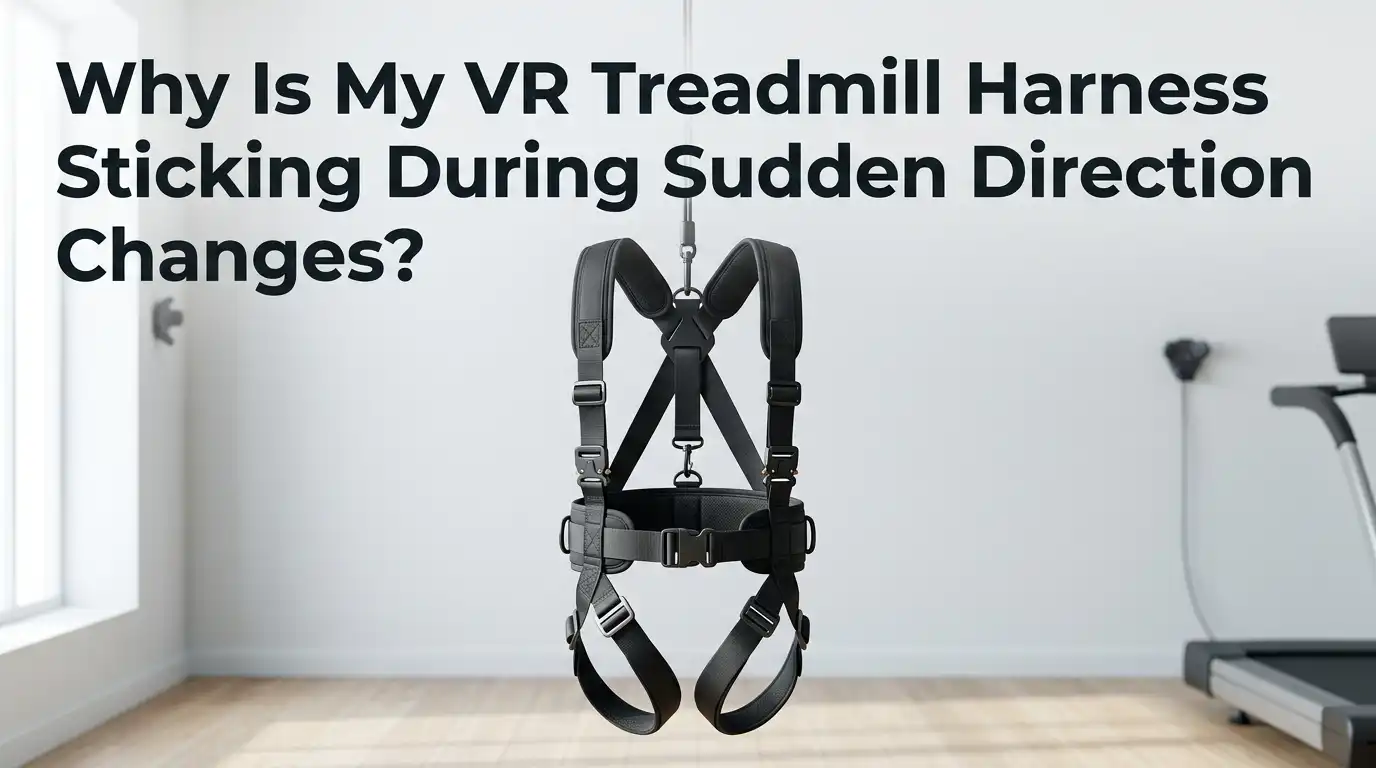
Your VR treadmill harness rides on a support ring or rail. This ring lets your waist swing and rotate freely. When you change direction fast, the harness must slide and pivot at the same time. If anything blocks that motion, you feel a stick.
The stick is friction winning over your movement. The harness wants to follow your hips, but a force holds it back. That force comes from dirt, dryness, worn parts, or bad fit. Sudden turns expose the problem because they demand the most movement at once.
Understanding this helps you hunt the cause. Slow walking may feel fine, but fast spins reveal the weak spot. Once you know friction is the root, every fix below makes sense. You are simply removing the things that fight your motion.
Check and Clean the Support Ring or Slide Rail First
Start with the part your harness touches most. The support ring or slide rail collects dust, skin flakes, and dried sweat. This buildup turns a smooth surface into a sticky one. Cleaning it often solves the problem instantly.
Wipe the entire ring with a dry microfiber cloth. Then use a slightly damp cloth with mild soap for stubborn grime. Dry it fully before you use the machine again. Check for sticky spots by sliding the harness by hand.
Pros: This fix is free, fast, and safe. You can do it in five minutes with items you already own. It also extends the life of your machine.
Cons: Cleaning alone may not help if parts are worn. You may need to repeat it often if you sweat heavily during play.
Apply the Right Lubricant to the Track
Dry tracks grip the harness. The right lubricant cuts that friction and lets the harness glide. Most VR treadmills use a low friction surface that benefits from a thin coat of silicone.
Use 100 percent silicone lubricant only. Never use oil based or grease products on plastic tracks because they attract dust and can damage the surface. Apply a small amount, spread it thin, and wipe away the excess.
Test the slide by hand after you apply it. The harness should move with light effort and no catching.
Pros: Silicone gives a long lasting smooth glide. It is cheap and works on most ring and rail systems.
Cons: Too much lube creates a sticky film that traps dust. Some machines warn against any lubricant, so check your manual first.
Inspect and Adjust the Harness Fit
A poorly fitted harness fights your every turn. If the belt sits too high, too low, or too tight, it binds against the ring. Fast direction changes make this binding obvious.
Loosen the waist belt and reposition it near the thinnest part of your waist. Re-thread the straps exactly as your owner manual shows, since a wrong thread path causes uneven pull. Tighten it snug but not crushing.
Walk a few steps and try a slow spin. The harness should rotate with your hips, not lag behind them. Adjust again until the turn feels free.
Pros: Correct fit improves comfort and control at once. It costs nothing and takes only minutes.
Cons: Finding the sweet spot takes trial and error. A harness sized wrong for your body may still bind even when threaded right.
Examine the Bearings and Rollers for Wear
Many harness systems use bearings or rollers to ride the ring. Over time these parts wear flat, dry out, or seize. A stuck roller drags the harness and creates that sudden grab during turns.
Spin each roller by hand. A healthy roller turns freely and quietly, while a bad one feels rough or refuses to move. Listen for grinding or squeaking sounds during play.
Replace worn bearings with the same type your maker specifies. A small bag of replacement bearings is inexpensive and easy to swap.
Pros: New bearings restore smooth motion completely. The fix is permanent and improves the whole feel of the machine.
Cons: Sourcing the exact part can take time. Some sealed systems make replacement hard without tools or skill.
Look at Your Overshoes and Foot Contact
Your shoes connect you to the treadmill dish. Worn or dirty overshoes stick to the surface and tug your body sideways. That sideways tug pulls the harness off its smooth path during turns.
Check the soles of your overshoes for grime, wear, or flat spots. Clean them with a damp cloth and let them dry fully. Replace overshoes once the low friction coating wears thin.
Test by sliding your foot across the dish. It should glide with even resistance everywhere.
Pros: Fresh overshoes restore even, predictable sliding. This often fixes harness pull that you blamed on the ring.
Cons: Overshoes wear out faster with heavy use. Buying replacements adds an ongoing small cost.
Level the Base and Check for Tilt
A tilted machine makes the harness fight gravity. If one side sits higher, the harness slides downhill and sticks when you turn uphill. Uneven floors are a common hidden cause.
Place a bubble level across the base in two directions. Adjust the feet or shim the low corner until the surface reads level. Re-check after the machine settles for a day.
A level base lets the harness move with equal effort in every direction. This removes the directional sticking that confused you before.
Pros: Leveling is a one time fix that helps balance and safety too. It needs no spare parts.
Cons: Some floors make perfect leveling hard. You may need shims or a mat to fully stabilize the base.
Tighten Loose Bolts and Hardware
Loose hardware shifts under load. When you turn fast, a loose bracket or arm flexes and pinches the harness path. This creates a stick that comes and goes without warning.
Go over every bolt on the ring, the support arm, and the base. Tighten them in a crisscross pattern so the pressure stays even. Do not over tighten plastic parts, since that can crack them.
Shake the structure gently to find any remaining play. A solid frame keeps the harness on its true track during every move.
Pros: This fix is free and improves stability and safety. It often cures mystery sticking that other steps miss.
Cons: You must recheck bolts regularly because vibration loosens them. Stripped threads need new hardware.
Replace Frayed or Stretched Straps
Straps stretch and fray with months of use. A frayed strap catches on the ring edge and snags during fast turns. A stretched strap lets the harness sit wrong and bind.
Inspect every strap for thin spots, loose threads, and worn stitching. Replace any strap that shows damage rather than risk a sudden failure. Use only the straps made for your model.
New straps hold the harness in its correct position. That correct position lets it pivot freely when you spin.
Pros: Fresh straps improve both safety and smoothness. They are low cost and simple to install.
Cons: Wrong sized straps can change the harness geometry. You must match the maker’s spec to avoid new problems.
Recalibrate the Harness Height and Center
Your harness has an ideal height and center point. If it sits too high, it limits your hip rotation and forces a stick. If it sits off center, one turn direction binds more than the other.
Set the harness so it cradles your waist with slight room to rotate. Center yourself on the dish before you start each session. Many machines allow waist rotation of around 22 degrees, so use that range.
Test both turn directions slowly. They should feel equally free with no favored side.
Pros: Correct height unlocks full rotation and comfort. It takes only minutes and no tools.
Cons: The right height differs per person. You may need to readjust if more than one person uses the machine.
Manage Sweat and Humidity Buildup
Sweat is a silent harness killer. It drips onto the ring, dries into a sticky residue, and rusts metal parts. Humid rooms make this worse and speed up the buildup.
Wipe down the ring and harness after every session. Keep your play area cool and dry with a fan or dehumidifier. Wear moisture wicking clothes to reduce drips onto the track.
A dry, clean track keeps friction low for far longer. This habit prevents sticking before it starts.
Pros: Sweat control protects every moving part at once. It costs almost nothing and adds only a minute per session.
Cons: It demands consistent effort after each play. Heavy sweaters may still need frequent deep cleaning.
Build a Simple Weekly Maintenance Routine
Most sticking comes from neglect, not defects. A short weekly routine keeps your harness gliding all year. Prevention beats troubleshooting every time.
Each week, wipe the ring, check the rollers, test the straps, and tighten loose bolts. Apply a thin coat of silicone lube once a month or when the glide feels rough. Keep a small log so you spot patterns early.
This routine takes ten minutes and saves hours of frustration. Your machine stays smooth and your turns stay sharp.
Pros: A routine catches small issues before they grow. It extends the life of the whole machine.
Cons: It requires discipline to stick with. Skipping weeks lets problems creep back in.
When to Contact the Manufacturer or a Technician
Some problems sit beyond a home fix. If the ring is cracked, the frame is bent, or a sealed part fails, you need expert help. Forcing a damaged machine can cause injury.
Stop using the treadmill if you hear loud cracking or feel the structure shift. Contact the maker’s support team with your model number and a clear description. Many offer parts, guides, and warranty repairs.
A trained technician can diagnose hidden faults safely. This protects both you and your investment.
Pros: Expert repair fixes serious faults the right way. Warranty support may cover the cost.
Cons: Repairs take time and may cost money out of warranty. Shipping large parts can be slow.
Frequently Asked Questions
Why does my harness only stick during fast turns and not slow walking?
Fast turns demand the most movement at once. Slow walking hides small friction, but a quick spin needs the harness to slide and pivot together. That extra demand exposes dust, dryness, or worn parts that slow walking never reveals.
Can I use regular oil or WD40 on my VR treadmill harness?
No. Oil based products attract dust and can damage plastic tracks. Use only 100 percent silicone lubricant in a thin layer. Always check your owner manual first, since some machines warn against any lubricant on certain surfaces.
How often should I clean and lubricate the support ring?
Wipe the ring after every sweaty session. Apply silicone lube about once a month or whenever the glide feels rough. Heavy users in humid rooms should clean more often to stop sticky residue from building up.
Could my body size or weight cause the harness to stick?
Yes, an ill fitting harness binds against the ring. A belt set too high, too tight, or off center limits your hip rotation. Re-thread and reposition the harness near your thinnest waist point to free the motion.
Is harness sticking a sign my treadmill is broken?
Usually not. Most sticking comes from dirt, dryness, fit, or minor wear, all of which you can fix at home. Only loud cracking, a bent frame, or a cracked ring point to real damage that needs a technician.
Will worn overshoes really affect the harness?
Yes. Worn or dirty overshoes grip the dish and tug your body sideways. That sideways pull drags the harness off its smooth path. Clean your soles or swap the overshoes to restore even sliding and stop the tug.
Hi, I’m Rosie Tate — a tech enthusiast, gadget geek, and the creator of RapidConvertLab! 🚀 I’ve spent years exploring the ever-evolving world of electronics, smart devices, and Amazon’s hidden tech treasures. Through my honest, hands-on reviews, I help everyday shoppers cut through the noise and pick gadgets that truly deliver value. When I’m not testing a new device, I’m probably unboxing one! 📦✨