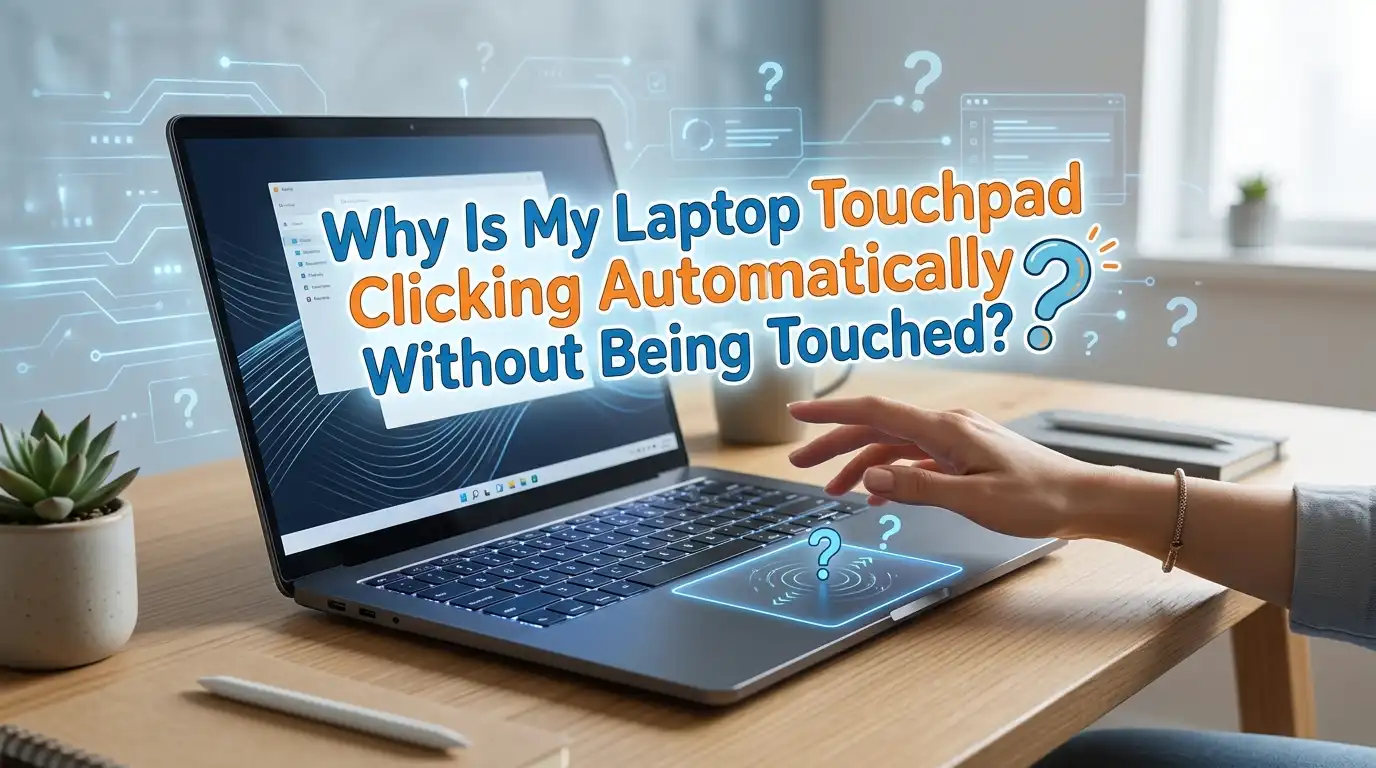
Why Is My Laptop Touchpad Clicking Automatically Without Being Touched?
Your laptop touchpad starts clicking on its own. Windows open randomly. Tabs close without warning. The cursor jumps across the screen. This problem feels frustrating, and it can stop your work in seconds. The good news is that you can fix it at home in most cases.
A self clicking touchpad usually points to a small software glitch, a dirty surface, a driver issue, or sometimes a hardware fault. You do not always need a repair shop.
Many users solve the issue with a few simple steps. This guide walks you through every known cause and every working fix. Read each section, try the methods one by one, and your touchpad should behave normally again.
Key Takeaways
- Ghost clicks often happen because of dirt, moisture, or oil on the touchpad surface, and a soft cloth wipe fixes the issue many times.
- Outdated or corrupt touchpad drivers are one of the top causes, and a quick driver update or reinstall through Device Manager solves most random click problems.
- Wrong sensitivity settings in Windows can make the touchpad react to small movements, so setting sensitivity to Low or Medium helps a lot.
- Palm rejection issues, tap to click features, and gesture conflicts trigger automatic clicks, and you can disable each one from the Touchpad settings panel.
- Hardware damage, swollen batteries, or a loose internal cable cause physical pressure on the touchpad, and these need professional repair if software fixes fail.
- Malware, background apps, and faulty external devices also cause ghost clicks, so a clean boot and antivirus scan are smart steps to try.
What Does It Mean When Your Touchpad Clicks On Its Own?
A self clicking touchpad means your laptop registers clicks or taps even when your fingers are nowhere near the pad. This is called ghost clicking or phantom clicking. The cursor may jump, menus may open, or apps may close without your input.
This issue is more common than people think. It happens on Windows laptops, MacBooks, and even Chromebooks.
The problem can be small, like one stray click per hour, or large, like constant clicks that block you from typing. Some users also see the cursor moving randomly along with the clicks.
The cause can be software based or hardware based. Software causes are easier to fix at home. Hardware problems may need a technician. Identifying the type of issue is the first real step toward a solution.
Clean Your Touchpad Surface First
The simplest fix is also the most ignored one. Dirt, sweat, dust, and food crumbs sit on the touchpad surface and confuse the sensors below. The touchpad reads this debris as a finger touch and creates a click.
Turn off your laptop. Take a soft microfiber cloth. Add a tiny drop of water or a small amount of isopropyl alcohol. Wipe the touchpad gently in circular motions. Avoid soaking the cloth. Dry the surface with another clean cloth before turning the laptop back on.
Pros: This method is free, quick, and safe for the device. It also removes oil that affects daily use.
Cons: It only helps if the cause is surface dirt. If the click problem comes from drivers or hardware, cleaning alone will not fix it. Still, always start here.
Restart Your Laptop The Right Way
A simple restart fixes many strange laptop issues, including ghost clicks. Background processes sometimes freeze or conflict with input drivers. A full reboot clears the system memory and resets these processes.
Click the Start menu, choose Power, and select Restart. Do not pick Shut Down and then power on, because Windows Fast Startup may skip a full reset. A real Restart closes all background tasks completely.
If the clicks return right after boot, the issue is deeper. If the clicks stop for hours or days, the cause was likely a temporary software glitch.
Pros: Takes less than two minutes. Needs no technical skill. Often solves random short term bugs.
Cons: It is a temporary fix if the root cause is a driver issue, hardware fault, or malware. You will need deeper steps in that case.
Adjust Touchpad Sensitivity In Windows Settings
High touchpad sensitivity is a major reason for random clicks. The pad reacts to very light pressure, vibration, or even airflow. Lowering the sensitivity tells Windows to ignore these small inputs.
Open Settings, then click Bluetooth and Devices, then Touchpad. Look for the Touchpad sensitivity option. Change it from High to Medium or Low. Test the touchpad for a few minutes after each change.
If you use a Windows 10 laptop, the path is Settings, Devices, Touchpad. The options look almost the same.
Pros: This fix is fast and reversible. It often stops ghost clicks caused by palm contact or surface vibration. You do not need any extra software.
Cons: A lower sensitivity may feel less responsive during normal use. You may need to press a little harder for clicks. Most users adjust within a day.
Update Or Reinstall The Touchpad Driver
Drivers are software that let your touchpad talk to Windows. A broken or outdated driver causes wrong inputs, including ghost clicks. Updating the driver fixes bugs released by the manufacturer.
Right click the Start button and open Device Manager. Expand the Mice and other pointing devices section. Right click your touchpad, like Synaptics, ELAN, or Precision Touchpad. Click Update driver, then Search automatically.
If updating does not help, choose Uninstall device. Restart the laptop. Windows will install a fresh driver on its own. You can also visit the laptop maker website and download the latest driver directly.
Pros: Solves most click issues caused by software bugs. Free and official method.
Cons: A wrong driver download from a random site can damage system files. Always use the official support page of your brand.
Disable Tap To Click Feature
The Tap to Click feature lets a single tap count as a click. This is helpful for fast users, but it also causes accidental clicks. If your palm or wrist brushes the touchpad while typing, Windows reads it as a tap.
Open Settings, then Bluetooth and Devices, then Touchpad. Expand the Taps section. Uncheck the box that says Tap with a single finger to single click. You can also disable two finger and three finger taps if they trigger random actions.
Test the touchpad. If ghost clicks stop, the Tap to Click setting was the cause. You can keep it disabled or turn it back on later.
Pros: Fixes click problems caused by palm contact or wrist brushing. Easy to toggle.
Cons: You will need to press the touchpad button to click. Some users miss the quick tap feel. It takes a few hours to adjust.
Check Palm Rejection And Gesture Settings
Modern touchpads include palm rejection, which blocks input when your hand rests on the pad. If this feature is weak or broken, ghost clicks appear. Adjusting the palm rejection level can solve the issue.
For Precision touchpads, go to Settings, Bluetooth and Devices, Touchpad. Expand the sensitivity menu. Choose Low sensitivity or Most sensitive based on which one stops the clicks. On Synaptics or ELAN touchpads, open the dedicated control panel and find the PalmCheck slider. Increase it.
Also turn off advanced gestures you do not use. Three finger and four finger swipes sometimes overlap with click inputs and create confusion.
Pros: Stops palm based ghost clicks without removing core touchpad features.
Cons: The setting names change across brands like Dell, HP, Lenovo, and Asus. You may need to read your laptop manual or search by model.
Disconnect External Mice And USB Devices
A faulty external mouse, wireless dongle, or USB device can send false signals to Windows. The system may show these as random touchpad clicks. This is one of the most overlooked causes of ghost clicking.
Unplug every USB device, including external mice, keyboards, hubs, printers, and game controllers. Remove your wireless mouse receiver too. Restart your laptop. Use only the touchpad for ten minutes.
If clicks stop, plug each device back in, one at a time. The device that brings the clicks back is the real cause. Replace its batteries, update its driver, or switch ports.
Pros: Helps you find a hidden hardware conflict in minutes. No tools needed.
Cons: You must test one device at a time, which takes patience. The issue can also come from a damaged USB port, not the device itself.
Run A Full Malware And Virus Scan
Some malware programs control your mouse and click events. Remote access trojans and adware can move the cursor or click links on their own. This can look exactly like a hardware ghost click problem.
Open Windows Security from the Start menu. Click Virus and Threat Protection. Choose Scan options, then pick Full scan. Let it run completely, even if it takes an hour. You can also use a trusted free scanner like Malwarebytes for a second opinion.
Remove any threats the scanner finds. Restart your laptop and watch the touchpad behavior. Random clicks often stop after the malware is gone.
Pros: Finds hidden threats that also slow your computer. Improves security overall.
Cons: Full scans use a lot of CPU and battery. Some free scanners push paid upgrades. Stick to official tools.
Perform A Clean Boot To Find App Conflicts
A clean boot starts Windows with only essential services. This helps you check if a third party app is causing the ghost clicks. Apps like screen recorders, remote desktop tools, or macro software can send fake clicks.
Press Windows key plus R. Type msconfig and press Enter. Open the Services tab. Tick Hide all Microsoft services. Click Disable all. Then go to the Startup tab and open Task Manager. Disable each startup item.
Restart your laptop. If the clicks stop, one of the disabled apps is the cause. Enable items one by one until you find the bad one. Uninstall it.
Pros: Pinpoints the exact app that breaks your touchpad. Saves you from a full system reset.
Cons: The process is slow. You need to restart many times. Beginners may feel confused by the long list of services.
Check For Hardware Damage And Swollen Battery
If software fixes fail, the issue may be physical. A swollen laptop battery pushes against the touchpad from below and causes constant pressure. This pressure makes the pad click without any touch.
Place your laptop on a flat surface. Look at it from the side. If the base is bent, lifted, or uneven, the battery may be swollen. Stop using the laptop right away and contact a service center. A swollen battery is a safety risk and can catch fire.
Also check for cracks, dents, or liquid damage around the touchpad. Even a small spill can short the sensor inside.
Pros: Helps you catch a dangerous battery issue early. Prevents bigger damage.
Cons: Repairs cost money. Battery replacement is not a do it yourself job for most users. Always get professional help.
Update Windows And BIOS
Old Windows builds and old BIOS firmware can cause input device bugs. Manufacturers release fixes for touchpad issues through these updates. Skipping updates leaves your system open to known problems.
Open Settings, then Windows Update. Click Check for updates. Install every pending update, including optional driver updates. Restart your laptop afterward.
For BIOS, visit the official support page of your laptop brand. Search by your model number. Download the latest BIOS file and follow the official guide. Plug in the charger before you start the update.
Pros: Fixes deep system bugs that no other method can reach. Improves overall stability.
Cons: BIOS updates carry risk. If the power cuts during the update, the laptop can become unusable. Follow the steps carefully.
Use An External Mouse As A Temporary Fix
If nothing works and you need to finish urgent work, an external mouse helps. Plug in a USB or Bluetooth mouse and disable the internal touchpad. This stops the ghost clicks while you wait for a real repair.
Open Settings, then Bluetooth and Devices, then Touchpad. Toggle the touchpad switch off. Now only the external mouse will work. Some laptops also have a function key, like F6 or F9, that turns the touchpad off.
This setup lets you keep working with no interruptions. You can re enable the touchpad later, after a fix or repair.
Pros: Gives instant relief from ghost clicks. Lets you keep using the laptop without delay.
Cons: Carrying an extra mouse reduces portability. A wireless mouse needs batteries or charging. This is a workaround, not a real fix.
When To Visit A Repair Technician
Some issues need expert tools and parts. If your touchpad keeps clicking after every fix above, the problem is likely inside the laptop. A loose ribbon cable, a faulty digitizer, or a damaged motherboard chip needs a technician.
Visit your laptop brand service center if the device is under warranty. Repairs may be free. For out of warranty laptops, choose a trusted local repair shop with good reviews. Ask for a written estimate before you agree to any work.
Back up your important files first. Repairs sometimes need a full system wipe.
Pros: Fixes root level hardware issues with the right tools.
Cons: Repair costs can be high. Some shops use copy parts that fail again. Always check reviews.
Frequently Asked Questions
Why does my touchpad click randomly even when I am not touching it?
The most common reasons are dirt on the surface, high sensitivity settings, outdated drivers, or a swollen battery. Start with cleaning and driver updates before checking hardware.
Can a virus cause my touchpad to click on its own?
Yes. Some malware controls mouse and click events to open ads or steal data. Run a full antivirus scan using Windows Security or a trusted tool to be safe.
Will turning off Tap to Click stop ghost clicks?
In many cases, yes. The Tap to Click feature reads light touches as full clicks. Turning it off stops accidental clicks from your palm or wrist while typing.
Is a swollen battery dangerous for my laptop?
Yes, very dangerous. A swollen battery can leak, catch fire, or damage the inside of your laptop. Stop using the device and get it checked by a technician right away.
Do I need to reinstall Windows to fix a self clicking touchpad?
Usually no. Most ghost click issues come from drivers, settings, or hardware. A Windows reinstall is the last step and should only be used if every other fix fails.
Can I use my laptop normally if the touchpad keeps clicking?
You can, but it will be hard. The smart move is to disable the touchpad and use an external mouse until you fix the problem. This prevents lost work and frustration.
Hi, I’m Rosie Tate — a tech enthusiast, gadget geek, and the creator of RapidConvertLab! 🚀 I’ve spent years exploring the ever-evolving world of electronics, smart devices, and Amazon’s hidden tech treasures. Through my honest, hands-on reviews, I help everyday shoppers cut through the noise and pick gadgets that truly deliver value. When I’m not testing a new device, I’m probably unboxing one! 📦✨