Why Is My E-Bike Battery Not Holding a Charge and How to Reset It?
You hop on your e-bike, twist the throttle, and the power dies after just a few miles. Frustrating, right? Your battery used to last for ages, but now it drops faster than a stone.
The good news is that a weak e-bike battery does not always mean you need a new one. Many times, the fix is simpler than you think.
In this guide, you will learn the real reasons your battery fails to hold a charge. You will also discover step by step methods to reset it, balance the cells, and bring back lost range. Let us get your ride back on track.
Key Takeaways
- Battery aging is the top reason your e-bike battery stops holding a charge. Most lithium ion packs last 500 to 1000 charge cycles before capacity drops below 80 percent.
- Cell imbalance often mimics a dead battery. When one cell group lags behind, the Battery Management System (BMS) shuts everything down early, even if other cells are fine.
- A BMS reset can revive a battery that refuses to charge. You just need to disconnect it, wait 10 to 30 minutes, and reconnect it properly.
- Charger faults trick people into blaming the battery. Always test the charger with a multimeter before you spend money on a new pack.
- Storage habits matter a lot. Keeping your battery between 50°F and 75°F and at 40 to 60 percent charge during long breaks doubles its useful life.
- Some problems need a pro. Swollen cells, burnt smells, or leaking fluid mean you should stop using the battery right away.
Understanding How Your E-Bike Battery Works
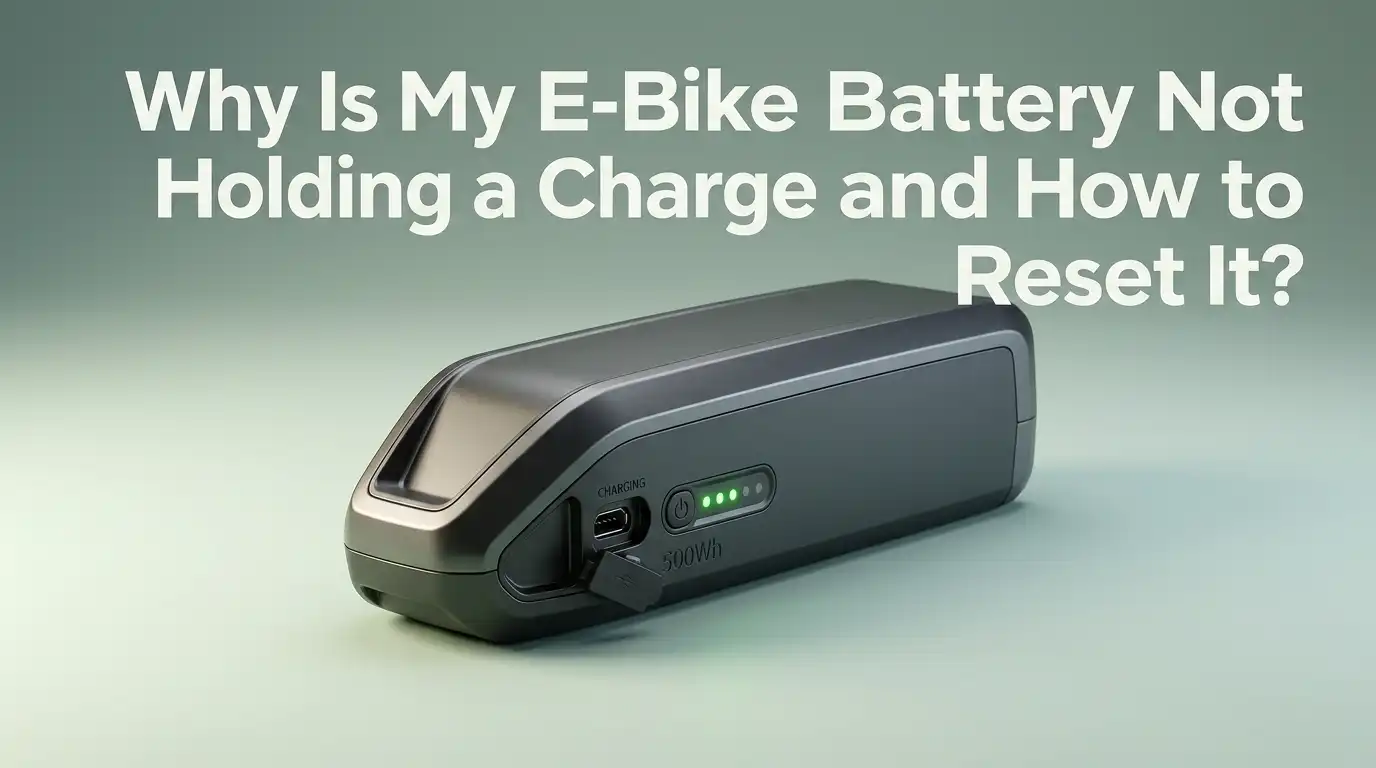
Your e-bike battery is more than a simple power box. It holds dozens of small lithium ion cells wired together in groups. A small circuit called the BMS watches over every cell. It checks voltage, temperature, and current flow.
When one cell drifts out of range, the BMS cuts power to protect the pack. This safety feature is great, but it also makes a healthy battery seem broken. A quick reset or balance charge often fixes the problem.
Knowing this helps you skip panic and act smart. Most issues come from the BMS, the charger, or one weak cell group, not the whole pack.
Reason 1: Natural Battery Aging and Wear
Every lithium ion battery loses capacity over time. This happens whether you ride daily or leave the bike in a shed. After two to four years of regular use, your range can drop by 20 to 40 percent.
Charge cycles speed this up. One full charge from empty to full counts as one cycle. Most quality e-bike packs handle 500 to 1000 cycles before noticeable fade sets in. Cheaper packs may fade faster.
You cannot stop aging, but you can slow it down. Avoid full discharges, skip overnight charging, and store the battery in a cool dry place. If your pack is old and tired, no reset will fully restore it. A replacement is the only real fix.
Pros of accepting aging: You avoid wasted effort on a dying pack.
Cons: Replacement batteries cost a lot, often 30 to 50 percent of the bike price.
Reason 2: Cell Imbalance Inside the Pack
Cell imbalance is the sneaky thief of range. Inside your pack, cells are grouped in parallel and series. Over time, one group may charge slower or hold less voltage. The BMS then stops the whole pack at the weakest cell.
You might see the charger turn green at 90 percent, but the bike dies fast. Or the battery shuts off while you still see bars on the display. This is a classic sign of imbalance, not a dead battery.
The fix is a slow balance charge. Leave the charger plugged in for several extra hours after it shows full. Many BMS units only balance cells in the last 10 percent of charge. A long top up gives them time to even out.
Reason 3: A Faulty or Weak Charger
People often blame the battery when the charger is the real problem. A worn charger may put out the right voltage but low current. The battery never reaches a full charge, so range drops.
Grab a multimeter and test the charger output. Compare the reading to the label. If voltage is more than 1 volt low, the charger is the issue. Also check the LED. A flickering or stuck green light is a warning sign.
Pros of testing the charger first: It is cheap, fast, and saves you from buying a new battery you do not need.
Cons: You need a basic multimeter and must know how to read DC voltage. A wrong charger can damage cells, so always match voltage and amperage to the battery spec.
Reason 4: Loose Connections and Dirty Terminals
Sometimes the battery is fine, but power cannot flow. Vibration from rough roads loosens wires inside the pack and at the bike contacts. Dust, rust, and moisture build up on metal terminals.
Pop the battery off the bike and look at the contacts. Clean them with a soft cloth and isopropyl alcohol. For tougher grime, a pencil eraser works well on flat pads. Never use sandpaper, as it scratches the plating.
Check the charge port too. A bent pin or stuck debris stops the charger from sitting flush. After cleaning, test the bike again. A dirty connection is the cheapest fix in the book, and it surprises many riders with how much range it brings back.
How to Reset Your E-Bike Battery Step by Step
A BMS reset clears small faults and wakes a sleeping pack. Follow this safe method.
First, turn off the bike and remove the battery. Next, unplug the charger from both the wall and the battery. Place the battery on a flat fireproof surface in a cool room. Wait 10 to 30 minutes. This lets the BMS fully power down.
Plug the charger into the wall first, then into the battery. Watch the LED. It should glow steady red or whatever color means charging on your model. Let it charge undisturbed for at least 8 to 12 hours, even past the full light.
This long charge gives the BMS time to balance cells. After it finishes, ride a short loop and check if range improves.
Pros: Free, simple, and safe for any user.
Cons: Will not help if the cells themselves are damaged.
How to Reset the BMS Using the Reset Button
Some modern e-bike batteries have a small reset button near the power switch or under a rubber cover. Check your user manual to find it. If your model has one, the process is even easier.
Press and hold the reset button for 10 to 15 seconds. You may see the LED flash or hear a soft click. Release the button and wait one minute. Then plug in the charger and let it run a full cycle.
This method clears stored fault codes inside the BMS. It works well after a deep discharge or a sudden shutdown. Not every battery has this button, so do not poke random holes in the case looking for one. If unsure, stick to the disconnect and wait method described above.
Reason 5: Deep Discharge Damage
Leaving your battery flat for weeks can hurt it badly. Lithium cells hate sitting near zero volts. When voltage drops too low, the BMS locks the pack to protect it. The charger then refuses to wake it up.
If your battery has been dead for a while, try a slow trickle wake up. Some chargers have a recovery mode that sends a tiny current to lift voltage. Without that, you may need a shop to use a benchtop charger.
To avoid this in future, charge your battery to 50 to 60 percent before long storage. Top it up every two months. Never let it sit empty over winter. A few minutes of prevention saves the cost of a new pack.
Reason 6: Heat and Cold Exposure
Temperature is a silent killer for lithium batteries. Heat above 95°F speeds up chemical wear inside the cells. Cold below freezing slows the reaction and can cause permanent damage if you charge in those conditions.
Store your battery indoors between 50°F and 75°F. Bring it inside after winter rides. Let it warm to room temperature before plugging in the charger. Never charge a frozen battery. Tiny metal spikes can form inside, which leads to short circuits.
Pros of careful temperature control: Longer battery life, more range, and safer rides.
Cons: You may need to plan storage space and timing, especially if you live in extreme climates.
Reason 7: Water Damage and Corrosion
E-bikes handle light rain, but battery cases are not submarines. Pressure washing, deep puddles, or leaving the bike in heavy rain can let moisture into the pack. Once water touches the BMS, things go wrong fast.
Check for green or white powder on the connectors. That is corrosion. Look for water stains inside the charge port. If you see any, dry the area with a soft cloth and let it sit in a warm dry spot for 24 hours.
If the battery still fails, the BMS may need replacement. This is a job for a trained tech, not a beginner. Water damage often voids the warranty, so check your paperwork first. Going forward, use a battery cover in wet weather and never spray water directly at the pack.
When to Replace Instead of Reset
Sometimes a reset is not enough. If your battery shows any of these signs, stop using it and look into a new one. The pack feels hot even when idle. The case is swollen or bulging. You smell something sweet or burnt. Charge time keeps getting longer, but range keeps getting shorter.
A battery older than four years with thousands of miles likely needs replacement. The same goes for packs that fail every reset method you try.
Pros of replacement: Full range returns and ride safety improves.
Cons: Cost can be high, and you must match voltage, capacity, and connector type to your bike. Buy only from trusted dealers to avoid unsafe knockoff packs.
Best Practices to Keep Your Battery Healthy
Good habits stretch battery life by years. Charge in a cool dry place on a hard surface. Never charge on a bed or carpet. Use only the charger that came with your bike or one approved by the maker.
Avoid charging right after a hard ride. Let the pack cool for 30 minutes first. Try to keep daily charge between 20 and 80 percent. Top to 100 percent only before long trips.
Clean the contacts every few months. Check the case for cracks. Store the battery indoors during very hot or very cold seasons. Ride often, but not to empty. These small steps add up. Your battery will reward you with steady range and fewer surprises on the road.
Frequently Asked Questions
How long should an e-bike battery hold a charge?
A healthy e-bike battery should hold its charge for several weeks when stored properly. On a single ride, expect 20 to 60 miles depending on motor power, terrain, and assist level. If you see a sharp drop in range, something is off and worth checking.
Can I reset my e-bike battery without opening it?
Yes. The safest reset is to disconnect the battery, wait 10 to 30 minutes, then recharge it fully. You do not need to open the case. Opening voids warranty and can damage cells. Leave deep repairs to trained shops.
How often should I balance charge my e-bike battery?
Run a full balance charge once every 4 to 6 weeks. Let the charger stay plugged in for several hours after the green light. This gives the BMS time to even out cell voltages and keeps range strong.
Why does my battery charge fast but die quickly?
Fast charging with quick drain usually points to cell imbalance or aging. The BMS reads the weakest cell and stops output early. Try a slow overnight balance charge first. If that fails, the pack may be near end of life.
Is it safe to leave my e-bike battery plugged in overnight?
Modern chargers shut off when full, so one night is fine. But leaving it plugged in for days adds heat and stress. Unplug once charged for best long term health. Never charge while sleeping in places without smoke alarms.
Can cold weather permanently damage my battery?
Yes, if you charge it while frozen. Cold storage is fine, but always let the battery warm to room temperature before plugging in. Riding in cold weather is safe, but expect reduced range until the pack warms up.
What does a swollen battery mean?
A swollen case means internal damage. Gas builds up inside failing cells. Stop using it right away. Do not try to charge or reset it. Take it to a recycling center that handles lithium batteries. It is a fire risk and not worth saving.
Hi, I’m Rosie Tate — a tech enthusiast, gadget geek, and the creator of RapidConvertLab! 🚀 I’ve spent years exploring the ever-evolving world of electronics, smart devices, and Amazon’s hidden tech treasures. Through my honest, hands-on reviews, I help everyday shoppers cut through the noise and pick gadgets that truly deliver value. When I’m not testing a new device, I’m probably unboxing one! 📦✨