How To Fix Smart Thermostat Short Cycling The HVAC System In Spring?
Spring weather feels great, but it can confuse your HVAC system. One minute the air is cool, the next it is warm. Your smart thermostat reacts to these swings, and sometimes it makes your system turn on and off too fast.
This rapid stopping and starting is called short cycling. It wears down your equipment, raises your energy bills, and leaves rooms feeling uneven. The good news is that most causes are simple to fix at home.
This guide walks you through every reason your system short cycles in spring and gives you clear steps to stop it. You will learn how to check settings, clean parts, and know when to call a pro. Let us solve this together.
Key Takeaways
- Short cycling means your HVAC turns on and off too quickly, usually running for less than 10 minutes per cycle. Mild spring temperatures make this worse because your home reaches the set point fast.
- A dirty air filter is the most common and cheapest fix. Clogged filters block airflow, cause overheating, and force the system to shut down early. Replace it every one to three months.
- Thermostat settings matter a lot. Adjusting your cycle rate, temperature differential, and minimum runtime can stop fast cycling without any tools or repair costs.
- Thermostat placement affects accuracy. A unit near vents, windows, sunlight, or heat sources reads the wrong temperature and triggers false cycles.
- Some causes need a professional. Low refrigerant, an oversized unit, frozen coils, or electrical faults require a licensed HVAC technician to fix safely.
- Spring is the best time for maintenance. A tune up before summer keeps your system running long, smooth cycles all season.
What Short Cycling Actually Means For Your HVAC
Short cycling happens when your heating or cooling system starts and stops in rapid bursts instead of running full, steady cycles. A healthy system usually runs for 10 to 15 minutes per cycle.
A short cycling system might run for only two to five minutes before shutting off, then restart minutes later. This pattern is hard on your equipment. The compressor and blower motor draw the most power during startup. When they restart over and over, they wear out faster.
Your home also struggles to reach a stable temperature. You end up with hot and cold spots and higher humidity. Understanding this basic pattern helps you spot the problem early before it leads to costly damage.
Why Spring Weather Triggers Short Cycling
Spring brings unpredictable temperatures that swing from cool mornings to warm afternoons. Your HVAC system was sized for the extreme heat of summer or the deep cold of winter, not these mild days.
When the outdoor air is only slightly different from your indoor set point, your system reaches the target temperature very quickly. It then shuts off, but the temperature drifts back fast, so it kicks on again.
This creates a constant on and off loop. The system never runs long enough to balance the air properly. Sunny spring days add to the problem because direct sunlight heats up rooms unevenly.
Knowing that spring conditions naturally encourage short cycling helps you focus on the right fixes, like adjusting settings rather than assuming your equipment is broken.
Check And Replace Your Air Filter First
A dirty air filter is the number one cause of short cycling, and it is the easiest to fix. When the filter clogs with dust and debris, it blocks airflow through your system. The unit overheats and shuts down early to protect itself.
This triggers the fast on and off pattern. Locate your filter near the return vent or inside the air handler. Pull it out and hold it up to a light. If you cannot see light through it, replace it.
Most homes need a new filter every one to three months. In spring, pollen counts rise, so filters clog faster.
Pros: Cheap, fast, no tools needed, improves air quality and airflow right away.
Cons: Does not fix deeper issues like refrigerant or sizing problems, and you must repeat it regularly.
Review Your Smart Thermostat Cycle Rate Settings
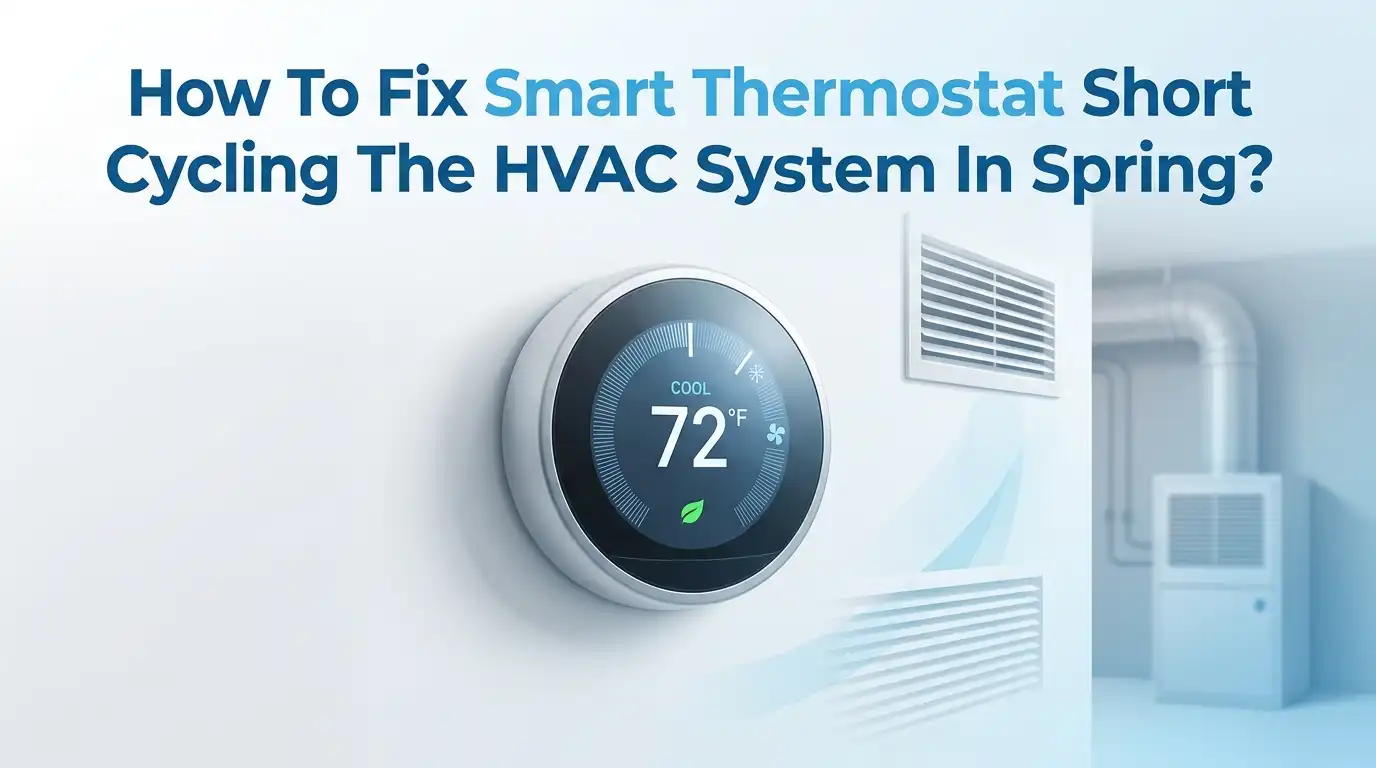
Many smart thermostats let you adjust how often the system cycles per hour. This setting is called the cycle rate or cycles per hour (CPH). A high CPH means the system turns on and off many times each hour, which can feel like short cycling.
Lowering this number creates longer, smoother cycles. Most heat pumps and air conditioners work best at around three cycles per hour.
Open your thermostat menu and look under installer or advanced settings. On a Honeywell unit you can change CPH directly. On Sensi you adjust the cycle rate in the app. Setting this correctly matches the thermostat to your equipment type.
Pros: Free, fixes cycling caused by settings, improves comfort and efficiency.
Cons: Some models hide these menus, and wrong settings can hurt comfort if you guess.
Adjust The Temperature Differential Or Swing
The temperature differential, also called swing or deadband, controls how far the temperature drifts before your system turns on or off.
A tight differential of half a degree makes the system react to tiny changes, causing frequent cycling. Widening the differential to one or two degrees lets the temperature move a bit more before the system responds. This means longer cycles and less wear.
For example, with a two degree swing and a set point of 72, your cooling turns on at 73 and off at 71. In spring, a slightly wider swing is ideal because outdoor temperatures change so often.
Pros: Reduces cycling instantly, lowers energy use, no cost involved.
Cons: Too wide a swing can make rooms feel less comfortable, with noticeable warm or cool drifts.
Set A Minimum Runtime Or Compressor Delay
Some smart thermostats, like Ecobee, offer a minimum runtime or compressor protection delay. This setting forces your system to run for a set number of minutes before it can shut off.
It also adds a delay between cycles so the compressor rests before restarting. This protects the compressor from rapid restarts that cause overheating and wear. Look in your thermostat settings for options like minimum cycle off time or compressor minimum on time.
Setting a five to fifteen minute delay often smooths out cycling. Keep in mind that if your system still cycles short despite a long minimum runtime, the cause is likely mechanical, not the setting.
Pros: Directly protects the compressor, reduces startup wear, easy to enable.
Cons: Not available on every model, and it cannot fix airflow or refrigerant faults.
Inspect Your Thermostat Placement
Where your thermostat sits has a big effect on accuracy. If it is near a supply vent, window, doorway, lamp, or in direct sunlight, it reads the wrong temperature.
It senses heat or cold that the rest of the house does not feel, so it cycles the system on and off at the wrong times. The ideal spot is on an interior wall, about five feet above the floor, away from drafts and heat sources.
Keep it at least eight to ten feet from vents. In spring, afternoon sun through windows can fool a poorly placed thermostat into thinking the room is hotter than it is.
Pros: Fixes false readings, improves whole home comfort, one time fix.
Cons: Moving a thermostat may require wiring work or a remote sensor, which adds effort.
Use Remote Sensors To Balance Temperature Readings
Many smart thermostats support remote room sensors. These small devices sit in other rooms and send temperature data back to the thermostat. Instead of reading only one spot, your system averages readings across the home.
This helps stop short cycling caused by one warm or cool room. For example, if your living room gets afternoon sun but your bedroom stays cool, a single sensor in either room gives a skewed picture.
Sensors let the thermostat make smarter choices. Place them in rooms you use most. Spring sunlight often heats one side of the house, so sensors keep cycling steady and even.
Pros: Better whole home accuracy, smoother cycles, more even comfort across rooms.
Cons: Sensors cost extra, need battery changes, and only some thermostat brands support them.
Clean The Condenser And Evaporator Coils
Dirty coils make your system work harder and shut down early. The evaporator coil inside absorbs heat, while the condenser coil outside releases it. When dust, pollen, or grass clippings cover these coils, heat transfer drops.
The system overheats and short cycles. Spring is prime time for buildup because pollen and yard debris are everywhere. Turn off power first. Gently clean the outdoor condenser coil with a soft brush and a garden hose on low pressure.
Clear leaves and grass from around the unit. The indoor coil is harder to reach and often needs a pro. Regular coil cleaning keeps cycles long and steady.
Pros: Restores efficiency, prevents overheating, you can clean the outdoor coil yourself.
Cons: Indoor coils need professional access, and rough cleaning can bend delicate fins.
Check For Low Refrigerant And Leaks
Low refrigerant is a serious cause of short cycling that you cannot fix yourself. When refrigerant runs low, usually from a leak, the system cannot transfer heat properly. The compressor strains, overheats, and trips a safety switch that shuts it down early.
You might notice weak cooling, hissing sounds, ice on the lines, or higher bills. Refrigerant should never run low in a sealed system, so low levels always mean a leak.
Only a licensed HVAC technician can find the leak, repair it, and recharge the refrigerant safely. Handling refrigerant requires special tools and certification by law.
Pros: A proper repair restores full performance and protects the compressor long term.
Cons: Requires a professional, costs money, and ignoring it can destroy the compressor.
Look For Frozen Evaporator Coils
A frozen evaporator coil is both a cause and a symptom of short cycling. When airflow drops or refrigerant is low, the coil gets too cold and ice forms on it. The ice blocks airflow even more, and the system shuts down to protect itself, then restarts.
You may see frost on the indoor coil or the refrigerant lines. First, turn off the system and let the ice melt fully, which can take a few hours.
Then check your air filter and vents for blockages. If freezing returns, the cause is likely low refrigerant or a blower problem that needs a technician. Clear airflow is your best defense.
Pros: Letting it thaw and fixing airflow is free and often solves the issue.
Cons: Repeated freezing points to deeper faults that need professional repair.
Rule Out An Oversized HVAC System
An oversized HVAC unit is a common hidden cause of short cycling, especially in spring. A system that is too big for your home cools or heats the space too fast. It hits the set point in minutes, shuts off, then turns back on shortly after.
In mild spring weather this happens even more because the load is small. You cannot resize a unit yourself, but you can reduce the symptoms.
Adjusting cycle rate, widening the differential, and using minimum runtime settings all help. If the system was recently installed and cycles badly, ask your installer about the load calculation. A correctly sized replacement is the true long term fix.
Pros: Smart settings can soften the symptoms without replacement.
Cons: True correction means replacing equipment, which is expensive, so settings are only a workaround.
Test Thermostat Wiring And Power Connections
Loose or corroded thermostat wiring can send false signals that cause short cycling. If a wire connection is weak, the thermostat may lose contact and tell the system to start and stop at random.
Turn off power at the breaker first. Remove the thermostat faceplate and check that each wire sits firmly in its terminal. Look for loose, fray, or corroded wires. Gently tighten any loose connections.
Also check the C wire, which many smart thermostats need for steady power. A weak C wire can cause erratic behavior. If wiring looks damaged or you feel unsure, stop and call a professional rather than risk a mistake.
Pros: Fixing loose wires is free and solves random cycling fast.
Cons: Wiring work carries some risk, and a missing C wire may need a pro to install.
Schedule A Spring HVAC Maintenance Tune Up
The best way to prevent short cycling all season is a professional spring tune up. A technician checks refrigerant levels, cleans coils, tests electrical parts, inspects the blower, and confirms your thermostat works correctly.
Spring is the ideal time because it catches problems before the summer heat stresses your system. During the visit, ask the tech to verify your thermostat settings match your equipment.
They can also spot early signs of leaks or worn parts. Regular maintenance extends the life of your system and keeps cycles long and efficient. A yearly tune up often costs far less than an emergency repair caused by neglected short cycling.
Pros: Catches every cause at once, extends equipment life, prevents summer breakdowns.
Cons: Costs a service fee, and you need to book ahead since spring is a busy season.
How To Tell DIY Fixes From Professional Repairs
Knowing which fixes you can handle saves you time and money. You can safely do these yourself: replace the air filter, adjust thermostat settings, clean the outdoor coil, check thermostat placement, and tighten visible wiring.
These are low risk and need no special tools. You should call a professional for low refrigerant, frozen coils that keep returning, oversized unit problems, deep electrical faults, and indoor coil cleaning. These tasks require training, tools, and legal certification.
A good rule is this: if the fix involves refrigerant, sealed components, or major wiring, leave it to a licensed technician. Trying complex repairs yourself can void warranties and cause more damage.
Pros: DIY fixes are free and fast for simple causes.
Cons: Misjudging a serious issue as DIY can worsen the problem and raise repair costs.
Frequently Asked Questions
Is short cycling bad for my HVAC system?
Yes, short cycling is hard on your equipment. The compressor and blower wear out faster because they use the most power during startup. Frequent restarts raise your energy bills, reduce comfort, and can shorten the life of your system. Fixing it early protects your investment.
How long should a normal HVAC cycle last in spring?
A healthy cycle usually runs for 10 to 15 minutes. In mild spring weather, cycles may be a little shorter because your home reaches the set point quickly. But if your system runs for less than 10 minutes and restarts soon after, that is short cycling and needs attention.
Can a smart thermostat cause short cycling on its own?
Yes, wrong settings can. A high cycle rate, a tight temperature differential, poor placement, or a missing C wire can all trigger fast cycling. The good news is these are easy to adjust in your thermostat menu or app without any repair cost.
Why does my system short cycle only on warm spring afternoons?
Warm afternoons with direct sunlight heat your rooms unevenly. If your thermostat sits in sunlight, it reads a higher temperature than the rest of the house. This triggers extra cycles. Remote sensors and better placement usually solve this seasonal pattern.
When should I call a professional for short cycling?
Call a pro if you notice ice on the coils, hissing sounds, weak cooling, or repeated cycling after you change the filter and check settings. These point to refrigerant leaks, oversized equipment, or electrical faults that need a licensed technician to fix safely.
Does cleaning the air filter really stop short cycling?
Often yes. A dirty filter blocks airflow and makes the system overheat and shut down early. Replacing it is the cheapest and fastest fix. Check your filter monthly during spring since pollen clogs it quickly, and replace it every one to three months.
Hi, I’m Rosie Tate — a tech enthusiast, gadget geek, and the creator of RapidConvertLab! 🚀 I’ve spent years exploring the ever-evolving world of electronics, smart devices, and Amazon’s hidden tech treasures. Through my honest, hands-on reviews, I help everyday shoppers cut through the noise and pick gadgets that truly deliver value. When I’m not testing a new device, I’m probably unboxing one! 📦✨