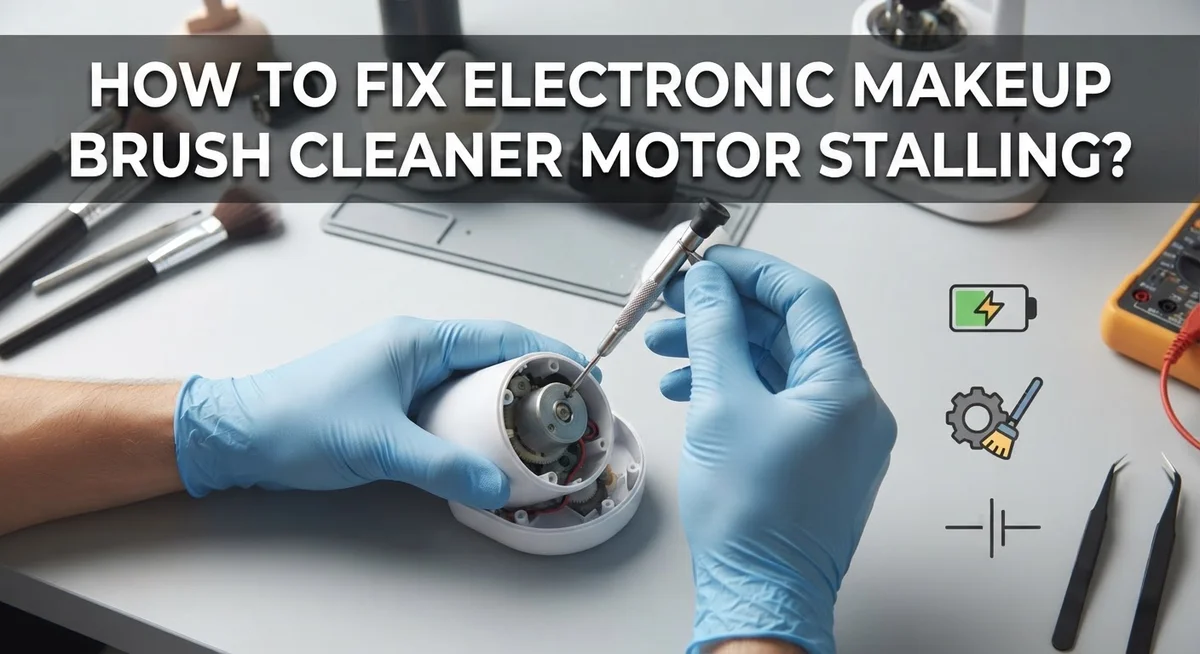
How To Fix Electronic Makeup Brush Cleaner Motor Stalling?
Your electronic makeup brush cleaner should make life easier. But when the motor stalls or the brush bar stops spinning, it can feel frustrating.
The good news? This problem is common. And it’s almost always fixable at home.
Motor stalling usually happens for a few simple reasons. Maybe your power adapter is too weak. Maybe debris is stuck in the drive belt. Or maybe soap residue has built up inside the device.
Most of these issues have quick, easy solutions.
In a Nutshell
- Check your power adapter first. Your device needs a 5V2A+ adapter to work well. A weak adapter is often the main reason for motor stalling.
- Inspect the drive belt. Debris or damage on the belt stops the brush bar from spinning. Clean it gently and check for wear.
- Clean the brush area often. Buildup inside the device blocks smooth motor function. Regular cleaning keeps things running well.
- Avoid overstuffing the bowl. Putting too many brushes in at once strains the motor. Clean brushes one at a time for best results.
- Use lukewarm water only. Hot water can damage brush glue and internal parts. Lukewarm water with gentle shampoo works best.
- Dry brushes quickly. Water sitting at the bristle base weakens the glue over time. Dry your brushes within ten seconds after rinsing.
Why Electronic Makeup Brush Cleaners Stall
Motor stalling happens when your brush cleaner stops spinning mid cycle or refuses to start. Understanding why this occurs helps you fix it fast.
Insufficient power supply is the leading cause. Your device needs a proper adapter with at least 5V and 2A output. A weak or incorrect adapter cannot deliver enough energy to the motor. The motor tries to run but lacks the juice to keep going, so it stalls. Always check your adapter specifications before troubleshooting anything else.
Debris in the drive belt creates friction that stops rotation. Hair, soap residue, and dried product build up inside the device over time. This gunk wraps around the belt or blocks the spinning mechanism. The motor works harder and harder until it simply quits. Regular cleaning prevents this common issue.
Overstuffed brush chambers force the motor to work too hard. Cramming multiple brushes into the bowl at once increases resistance. The motor cannot handle the extra load and stalls as a safety response. Use one brush or a small cluster, never the entire collection at once.
Water damage inside the device weakens electrical connections. If water pools at the bristle base or seeps into motor components, corrosion starts. Wet electronics struggle to function properly. This is why drying your cleaner after each use matters so much.
A stuck brush bar also causes stalling. Sometimes bristles get tangled or twisted around the spinning rod. The bar cannot rotate freely, so the motor shuts down to prevent damage. Inspect the brush area for tangles and remove them gently.
Thermal protection kicking in might seem like stalling too. If the motor gets too hot, built in safety features shut it down temporarily. Let the device cool for 15 to 20 minutes before using it again. This protects the internal components from burning out.
Checking Your Power Adapter and Supply
Your power adapter is often the first thing to check when your motor stalls. A weak or incompatible adapter cannot deliver enough electricity to keep the motor running smoothly.
Look for the adapter specifications printed on the device or manual. Most electronic makeup brush cleaners need at least a 5V2A power supply to function properly. If your adapter provides less power, the motor will struggle and eventually stop.
Inspect the adapter cable carefully for any visible damage. Look for cuts, fraying, or bent connectors. Even small damage can interrupt power flow and cause stalling. If you see damage, stop using that adapter immediately.
Check where the adapter connects to your device. Make sure the connector sits firmly in the port with no gaps or loose connections. A loose connection means inconsistent power delivery, which triggers motor stalling.
Test your outlet next. Plug a different device into the same outlet to confirm it works. Sometimes the problem is your wall outlet, not the adapter. Try a different outlet in another room to be sure.
If you have access to another compatible adapter, test it with your brush cleaner. This helps you determine if your original adapter is faulty. Your motor should run smoothly with proper power input.
Clean the connector ports on both the adapter and device. Dust and debris can block electrical contact. Use a dry cloth to gently wipe both metal connectors.
Pay attention to how long you use the device continuously. Some adapters overheat during extended use, causing the motor to cut out as a safety feature. Let your adapter cool for 15 minutes if this happens, then try again.
A correct power supply with solid connections eliminates most stalling problems. This simple check saves you time and frustration before investigating other potential causes.
Step-by-Step: Disassembling and Inspecting the Brush Rod
Start by unplugging your device completely. This keeps you safe while working inside. Locate the transparent cover on top of your brush cleaner. Most models have a simple push release mechanism.
Push the brush rod gently to the left. You will feel it shift slightly. Once it moves, lift the entire rod straight up and out of the device. Set it on a clean, dry surface.
Examine the brush rod carefully. Look at the bristles first. Check if any bristles are bent, matted, or stuck together. Damaged bristles can cause uneven spinning and motor strain. Run your fingers gently along the bristles to feel for debris.
Next, inspect where the rod connects to the motor. This is called the drive mechanism. Look for any hair, soap residue, or lint wrapped around the connection point. Even small bits of debris cause stalling. Use a soft brush or cloth to gently remove anything you find.
Check the internal brush chamber inside the device. Shine a light inside and look for water droplets, soap buildup, or hair clumps. These materials create friction that stops the motor. Wipe the interior gently with a dry cloth.
Examine the drive belt if your model has one visible. It looks like a small rubber band inside. Look for cracks, tears, or debris caught on it. A damaged belt prevents proper rotation.
Rinse the brush rod under lukewarm water. Use your fingers to gently separate any bristles stuck together. Do not soak the rod. Pat it dry immediately with a soft towel.
Check the rod’s base where it connects to the motor shaft. Make sure no water remains here. Moisture in this area causes electrical problems and stalling.
Once everything is clean and dry, reinsert the rod. Push it straight down into the device. You should hear or feel a click when it locks into place properly. Your device is now ready to test.
Cleaning the Brush Bar and Drive Belt
The brush bar and drive belt work together to make your cleaner spin. When either gets dirty or damaged, your motor stops working. Let’s fix this problem step by step.
Start by removing the transparent cover on your device. You’ll see the brush rod inside. Push it gently to the left, then lift it straight up to pull it out completely. This gives you access to the drive belt underneath.
Rinse the brush rod under lukewarm water. Use your fingers to wipe away any soap buildup, hair, or dried product stuck to the rod. Pay special attention to the base where the rod connects to the motor shaft. Debris here causes major spinning problems.
Now look at the drive belt itself. This rubber or plastic piece transfers power from the motor to make the brush spin. Check for debris wrapped around it. Hair, lint, and dried soap often tangle here and stop rotation completely.
Clean the drive belt gently with a soft cloth. Remove any visible debris by hand. If the belt looks cracked, frayed, or permanently damaged, it needs replacement. A damaged belt cannot transfer power properly.
Fill your bowl with lukewarm water and add gentle shampoo. Swirl the brush rod in this mixture until the water runs clear. This removes all remaining buildup inside the bowl area.
Dry everything thoroughly with a clean cloth. Let the brush rod air dry for a few minutes before reinserting it. Make sure the rod clicks back into place firmly.
Reassemble your device carefully. The brush bar should spin smoothly now. If it still stalls, the motor itself may need professional service. But cleaning these two components fixes stalling in most cases.
Proper Washing Technique to Prevent Future Stalling
Proper washing technique keeps your electronic makeup brush cleaner working smoothly. Start by using lukewarm water only. Hot water damages internal components and weakens the motor connections over time.
Insert one brush at a time into the device. Never overstuff multiple brushes simultaneously. The motor works harder when forced to spin extra weight, which triggers stalling and shortens your device’s lifespan.
Apply a small amount of gentle shampoo to the water bowl. Swirl the brush slowly for about 5 to 10 seconds. This timing prevents bristle damage while removing makeup residue effectively.
Check the water clarity after each brush. If water still looks cloudy, repeat the swirling motion once more. Clear water means the brush is truly clean.
Dry your brushes within 10 seconds after cleaning. Remove the brush immediately and pat it dry with a clean towel. Leaving brushes wet inside the device allows water to settle at the bristle base, which damages the glue holding bristles together.
Empty the water bowl completely after each use. Stagnant water left in the bowl creates mineral buildup that clogs the motor over time. Dry the bowl thoroughly before storing.
Allow your device to air dry for at least 30 minutes after finishing all brushes. This prevents moisture from accumulating inside the motor chamber. Never store your cleaner while damp.
Use distilled water if your tap water is hard or mineral rich. Minerals build up on the drive belt and motor shaft, causing resistance and stalling. Distilled water reduces this issue significantly.
Clean the brush chamber opening weekly with a soft, dry cloth. Debris and dried soap particles collect here and eventually interfere with brush rod movement. A quick wipe takes seconds and prevents major problems.
These simple habits eliminate most motor stalling issues before they start. Consistency matters more than perfection when maintaining your device.
Common Mistakes That Cause Motor Issues
Many people make mistakes that directly cause motor stalling. Understanding these errors helps you avoid expensive repairs.
Overstuffing multiple brushes at once is a major problem. Your device works best with one brush inserted at a time. When you cram several brushes into the chamber, the motor struggles to spin them all. This extra strain causes the motor to stall or stop completely. The internal components simply cannot handle the weight and friction.
Using too much soap creates another common issue. Excess soap builds up inside the motor chamber and on the drive mechanisms. This sticky residue slows down the spinning action until the motor cannot turn at all. A small amount of gentle shampoo goes a long way in cleaning brushes effectively.
Leaving brushes soaking in water damages both your brushes and your device. When bristles stay submerged for too long, water seeps into the glue that holds bristles together. This weakens the bristle base and causes bristles to fall out. Loose bristles then jam inside the motor chamber, causing stalling.
Allowing water to pool at the bristle base creates serious problems. Water should never sit where the brush connects to the rod. This moisture travels into the motor housing and causes electrical shorts or corrosion. Always dry brushes within seconds of cleaning to prevent this damage.
Using an inadequate power adapter is perhaps the most overlooked mistake. Your device needs at least 5V2A power to function properly. Underpowered adapters cannot deliver enough energy to keep the motor spinning smoothly. The motor starts but cannot maintain consistent speed, leading to frequent stalling.
Ignoring warning signs early makes small problems become big ones. If your motor hesitates or sounds different, address it immediately. These early signals indicate moisture, debris, or mechanical issues developing inside. Catching problems quickly prevents complete motor failure and extends your device’s lifespan significantly.
Troubleshooting a Non-Spinning Brush Bar
When your brush bar stops spinning, the issue usually stems from one of three areas: power supply problems, motor shaft obstruction, or drive belt misalignment. Let’s work through each one systematically.
First, verify your power adapter meets minimum requirements. Your device needs at least a 5V2A adapter to function properly. A weaker adapter will cause the motor to stall under load. Check that your cable connects firmly to both the device and wall outlet. Try a different outlet to rule out electrical issues at your current location.
Next, inspect the motor shaft connection point. Remove the transparent cover and gently push the brush rod to the left, then lift it out completely. Examine where the rod connects to the motor shaft inside the device. Look for mineral buildup, dried soap residue, or hair wrapped around this connection point. These debris particles prevent proper rotation.
Clean this area carefully with a soft, damp cloth. Use lukewarm water only. Avoid forcing anything, as you could damage internal components. Once clean and dry, reinsert the rod by aligning it with the shaft and pushing right until it clicks into place.
Check for drive belt issues if your model has a visible belt. Look for twists, cracks, or debris tangled around it. A misaligned belt won’t transfer power to your brush rod effectively. Gently straighten any twisted sections and remove debris with a soft cloth.
After reassembly, test the device without brushes first. Press the power button and listen for smooth motor sounds. If it still stalls, the motor itself may need professional service.
Prevention matters most. Always use one brush at a time, never overstuff the chamber. Empty water after each session and allow your device to air dry completely before storing. These habits prevent most motor stalling problems from developing.
Final Thoughts
Motor stalling feels frustrating, but most fixes are simple. You don’t need special tools or technical skills to solve this problem.
Power supply issues cause most stalling problems. Always check your adapter meets the 5V2A minimum requirement first.
Regular maintenance prevents future headaches. Clean your device weekly and dry brushes quickly after each wash.
Remember these key points when trouble strikes. Never soak brushes for long periods. Avoid overstuffing multiple brushes at once. Skip excessive soap use.
Check the drive belt if your brush bar won’t spin. Look for debris or damage that blocks smooth rotation.
Small problems grow into bigger issues when ignored. Address stalling symptoms right away instead of waiting.
Your device works hard to keep brushes clean. Treat it well, and it will serve you for years.
Good habits matter more than expensive fixes. Simple actions like proper drying and gentle cleaning go a long way.
Test your device without brushes after any repair. This confirms the motor spins freely before regular use resumes.
Keep your adapter separate from other electronics. Mixing power sources can damage sensitive motor components over time.
Water damage remains a top cause of failure. Keep liquids away from electrical parts during cleaning sessions.
Patience helps when troubleshooting stalling issues. Work through each step methodically instead of rushing repairs.
Most stalling problems trace back to simple causes. Power adapters, debris, and moisture top the list of culprits.
Your makeup brushes deserve proper care too. A well maintained cleaner protects your brushes and your investment.
Trust these basic troubleshooting steps first. They solve the vast majority of stalling complaints without professional help.
Stay consistent with cleaning routines going forward. This single habit prevents most future motor problems entirely.
With proper care, your electronic brush cleaner runs smoothly. Follow these guidelines, and stalling becomes a rare occurrence rather than a constant struggle.
Frequently Asked Questions
Why does my brush bar stop spinning suddenly?
A non-spinning brush bar usually points to three main issues. First, check if your power adapter meets the minimum 5V2A requirement. Many devices stall when powered by weak adapters. Second, inspect the motor shaft connection point and clean away any debris or buildup. Third, examine the drive belt for twists, cracks, or tangled material that blocks rotation.
After cleaning these areas, test your device without brushes inserted. This helps confirm the motor works properly before you resume cleaning.
What power supply do I actually need?
Your device requires at least a 5V2A adapter to run smoothly. Weaker adapters cause the motor to stall midway through cleaning cycles. Always verify your adapter matches or exceeds these specifications before troubleshooting other parts.
Keep your adapter separate from other electronics. This prevents confusion and ensures you use the correct one each time.
How do I clean the motor shaft safely?
Turn off and unplug your device first. Use a soft, damp cloth to gently wipe around the motor shaft connection point. Remove any soap residue, dust, or mineral deposits that accumulated during use.
Avoid using excessive water near electrical components. Let the area air dry completely before plugging the device back in.
Can water damage cause motor stalling?
Yes, water damage is a top cause of motor failure. Never leave brushes soaking in water, as moisture seeps into the motor housing. Always allow your device to dry thoroughly after each cleaning session.
Pay special attention to the bristle base. Water pooling there creates the most damage to internal components.

Hi, I’m Rosie Tate — a tech enthusiast, gadget geek, and the creator of RapidConvertLab! 🚀 I’ve spent years exploring the ever-evolving world of electronics, smart devices, and Amazon’s hidden tech treasures. Through my honest, hands-on reviews, I help everyday shoppers cut through the noise and pick gadgets that truly deliver value. When I’m not testing a new device, I’m probably unboxing one! 📦✨